Methods & Praxis
Decolonial feminist psychology is not defined by a single method, technique, or research design. Across these interviews, it appears instead as a set of methodological orientations: ways of listening, witnessing, creating, theorizing, teaching, healing, and transforming institutions.
A method becomes decolonial-feminist through how it is practiced: whether it is accountable to place and history; whether it treats participants as knowledge-holders and theorists; whether it refuses extraction, rescue, and disciplinary hierarchy; and whether it asks not only “What can I learn?” but also “Who does this serve?” and “Who gets to be recognized as an expert?”
The orientations below name recurring practices across the interviews. Many are connected to broader traditions of critical, feminist, community, and participatory research. What distinguishes their use here is a shared commitment to treating colonial-gendered history as constitutive of the present, centering what and who has been made absent, interrogating psychology’s own colonial architecture, and refusing to separate gender from coloniality.
Toward a Decolonial Feminist Psychology methodology
Below are 6 of many methodological orientations that emerged across the interviews in this project.
________________________________________________________________________________________________________________________________________________________________________________________________________________
Arts-Based and Visual Methods
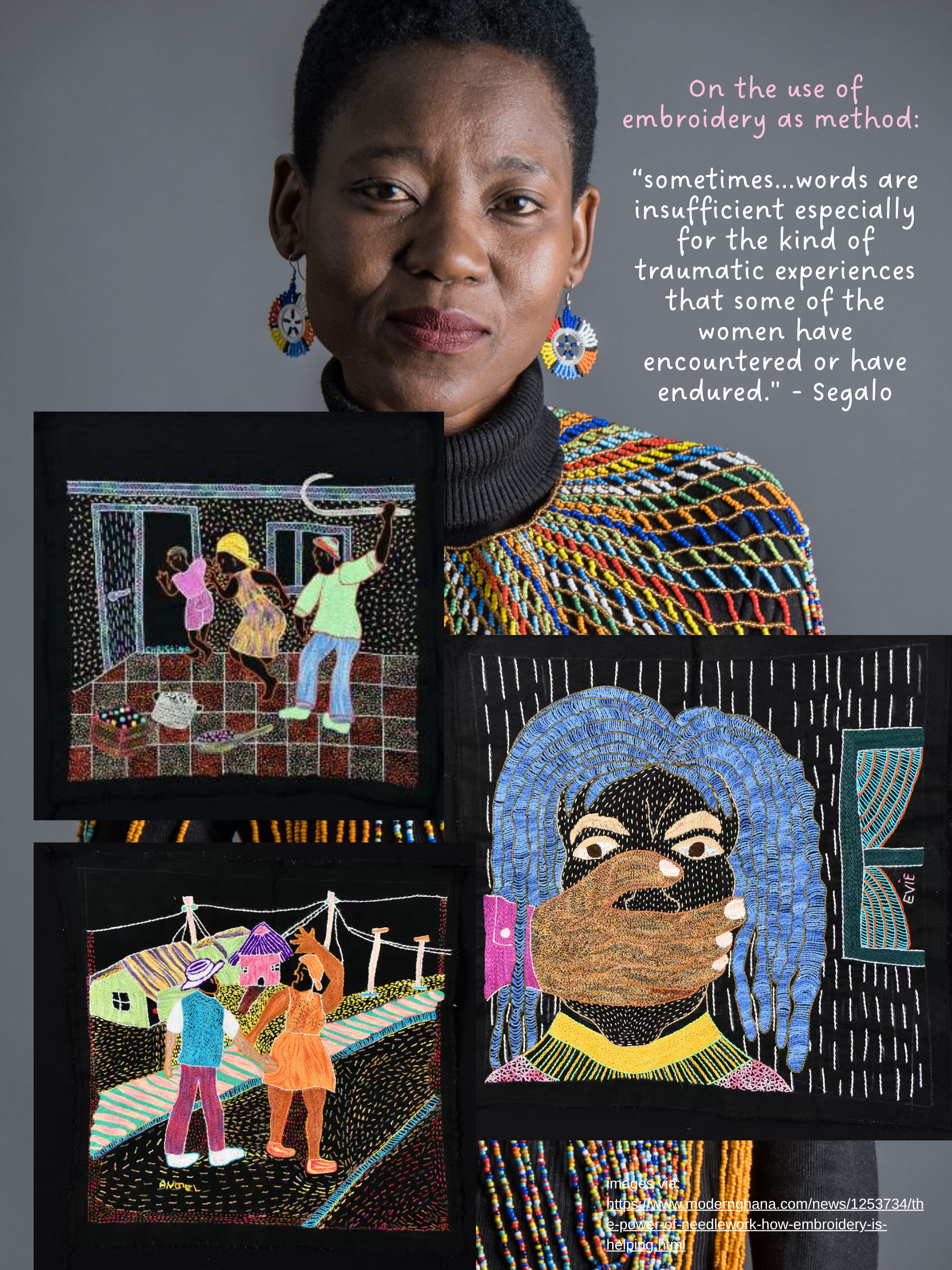
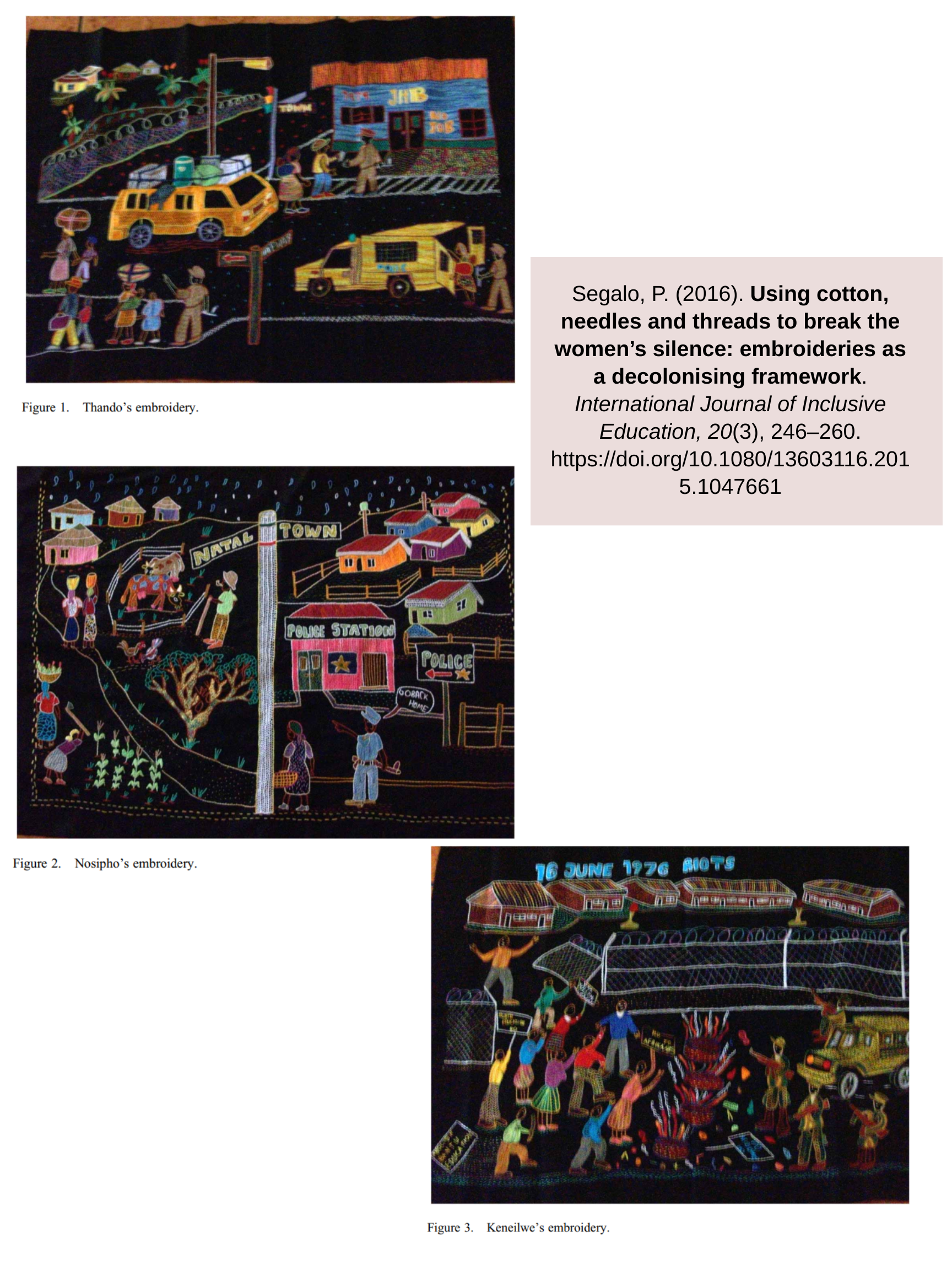
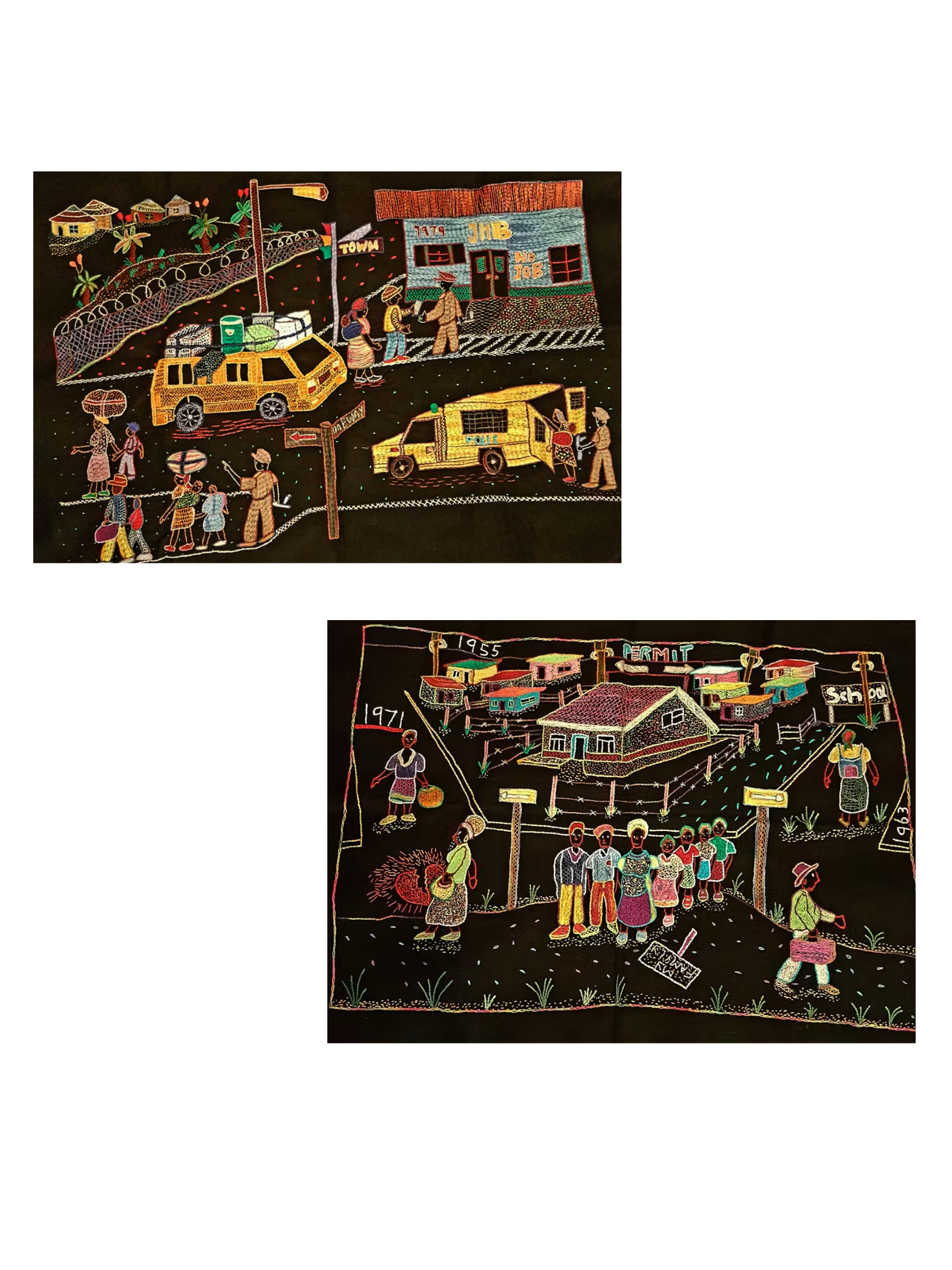
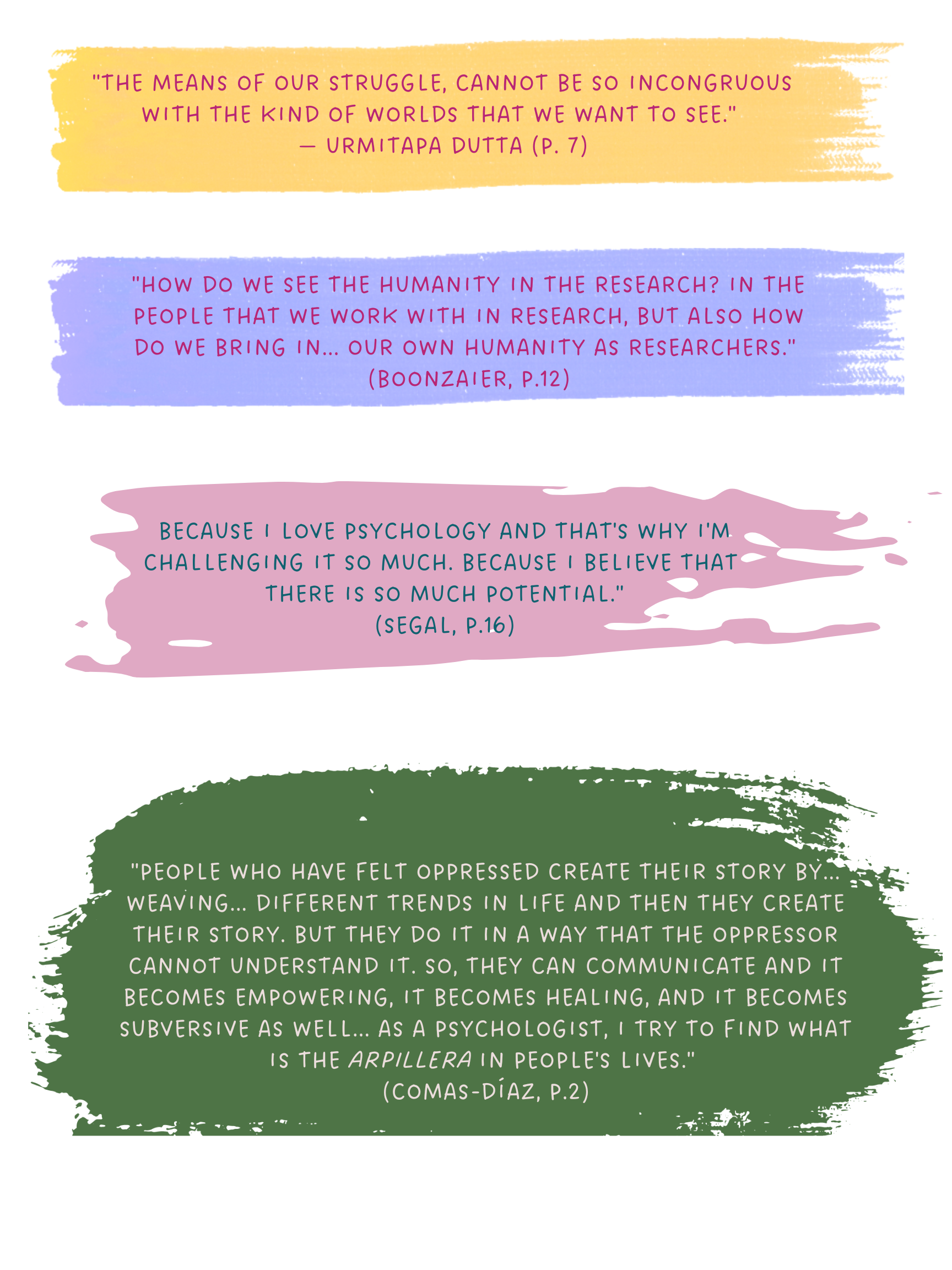
Across these interviews, we see a frequent turn to visual, material, and narrative forms as ways of creating conditions for people to represent their own worlds. For example, Segalo works with women's collectives in South Africa who use embroidery (a skill the community already holds) as a medium for telling stories about apartheid-era violence that the Truth and Reconciliation Commission structurally excluded. Comas-Díaz draws on the Latin American concept of arpillera, a textile art form where oppressed people weave their stories in ways the oppressor cannot understand, as a metaphor and practice of protected truth-telling. She further shares that "as a psychologist, I try to find what is the arpillera in people's lives." Boonzaier organized an arts-based retreat, which used clay, Lego, painting, drumming, and photography, as her research team explored what it means to study the very violences they themselves may have experienced. And Bell, working through film, installation, jazz, poetry, and surrealism calls the latter “a psychological philosophy of freedom” and emphatically adds that “I don't think it's easy for us to see, to analyze reality without art”, noting that imagination is a precursor to freedom, liberation, emancipation, and
social justice.
“Words are insufficient especially for the kind of traumatic experiences that some of the women have encountered or have endured.” - Segalo, Interview p.6
"I started thinking, what would it mean? What would it look like if we also push beyond just making embroideries that can then be sold for self-sustenance but also use that as a tool and a voice to also speak to broader structural issues that are happening.”- Segalo, Interview pp. 4-5
Participatory and collective knowledge-making: Methods That Prioritizes Community Needs and Community-Driven Knowledge Production
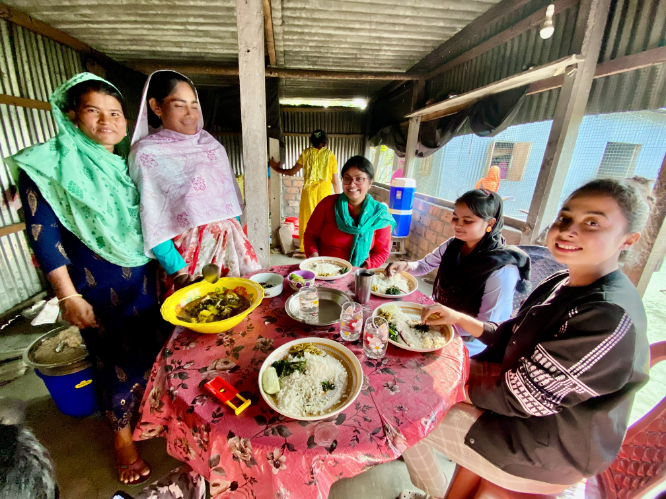
Decolonial feminist scholars resist the practice of data extraction, and insist that the people affected by research are not merely its subjects but its knowledge holders. This commitment shows up concretely in who defines the questions, who interprets the findings, who is recognized as a theorist, and who holds authority over what the research means and needs to do.
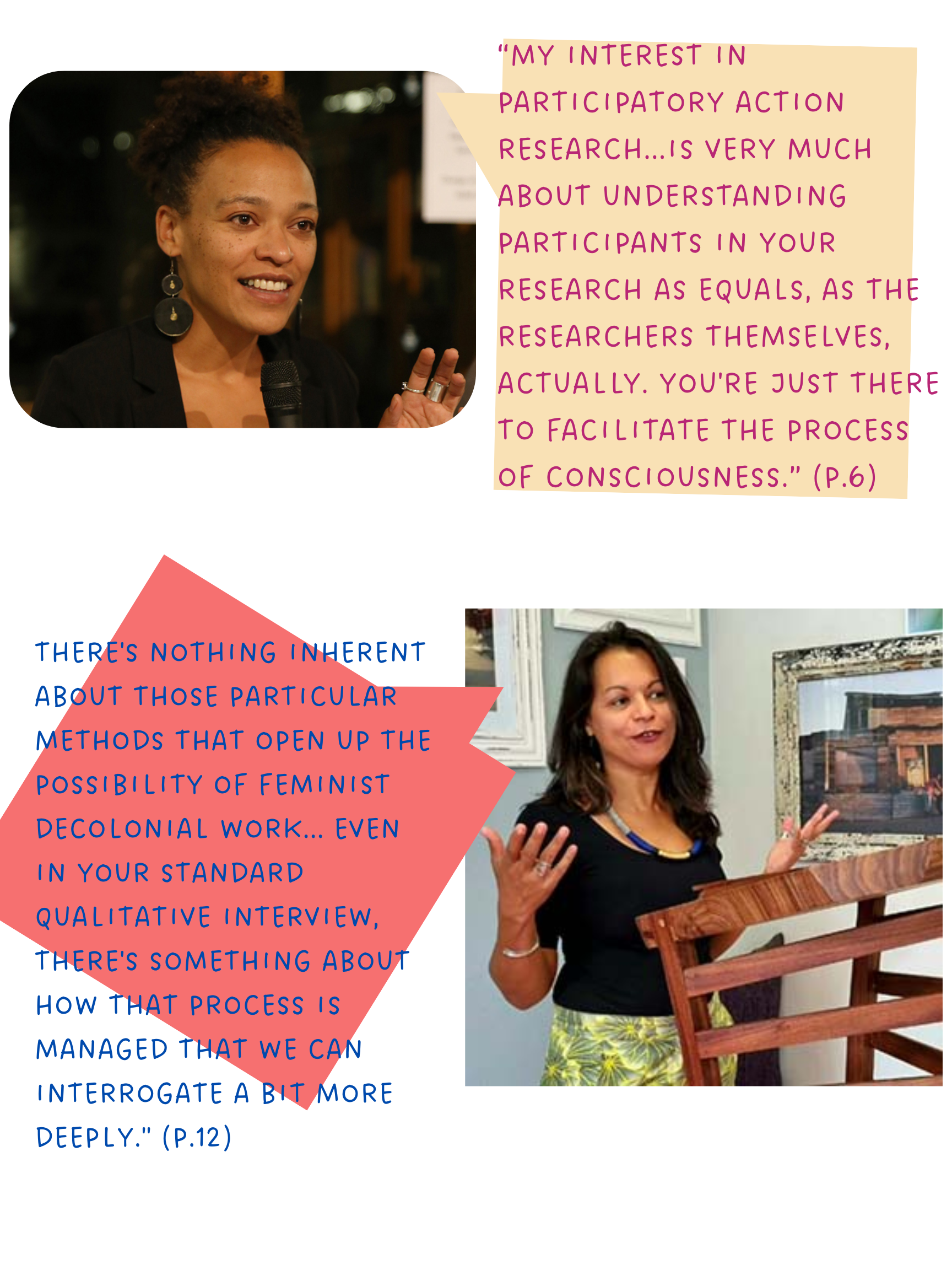
Where in traditional methods "the researcher has a lot of power there, because you're crafting the question that needs to be answered," Kessi considers instead her role as a facilitator of “the process of consciousness” rather than as the expert. She underscores the importance of "understanding participants in your research as equals, as the researchers themselves." Dutta describes her work with women in conflict-affected Northeast India as attending to the analysis the women were already making, treating their narration of the interconnection between state violence, family life, and ethnic conflict as theory, not merely raw material for the researcher's interpretation. Savaş treats interpreters, participants, and community relationships as part of the knowledge-making process. Across these examples, participation becomes meaningful when it changes the research relationship: who asks, who interprets, who benefits, and who is recognized as an expert.
“It is not inherently feminist, it is not inherently decolonial. You just have to work on it.” - Savaş, interview p.9
Roots and Routes: Grounding Method in Place and Colonial-Gendered Histories
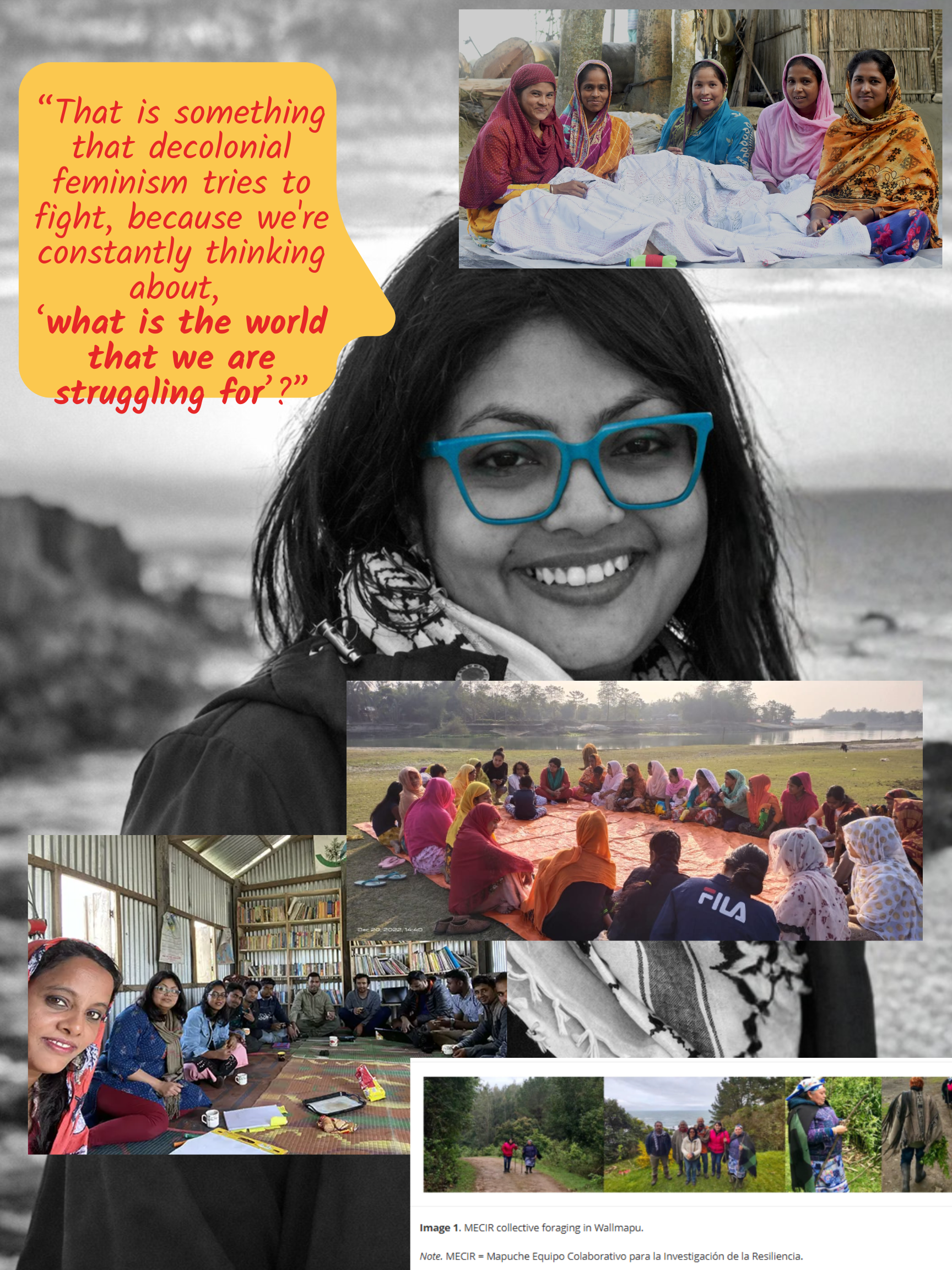
Situating theorizing in place, gendered history, and struggle
A decolonial feminist method is attentive and accountable to both place and history, simultaneously,
Segalo argues for "theorizing from where we are," and Dutta similarly insists on prioritizing "where life is happening...this is the space from where we have to understand what is going on." She theorizes from Northeast India, Palestine, community struggle, and women’s everyday resistance from within those places. Bell roots her analysis in Jamaica's specific class-race history, grounding her work in Caribbean anti-colonial thinking, drawing on Glissant, René Depestre, Aimé Césaire, and Suzanne Césaire. Savaş developed Kindred Narrative Inquiry in direct response to the cross-linguistic, cross-cultural demands of conducting life-story interviews with resettled refugees in Southeast Michigan, building the interpreter relationship into the method itself rather than treating translation as procedural
"I think psychology needs resources that the Western concept of psychology does not contain. And therefore, we have to bring critical theory into it. And the critical theory, I lean on most is anti-colonial thinking from the Black Archipelago from the Caribbean, and I do that because the Caribbean was a place that coloniality really cemented its project of modernity." - Bell, interview pp. 5-6
Institutional, pedagogical, and space-making methods
Decolonial feminist methodology also happens inside classrooms, departments, archives, journals, public media, and institutional spaces. Boonzaier and Kessi’s Hub for Decolonial Feminist Psychologies in Africa is not only a research unit: it is a physical, affective, intellectual, and student-centered space of belonging. Savaş uses archives and course design to make feminist and decolonial questions central rather than peripheral. Dutta reconfigures classroom practices around students’ lives and responsibilities. Comas-Díaz builds journals, organizations, and Spanish-language public psychology. Bell treats the classroom as a contact zone where theory, power, pain, and social relations can be worked through.
Space-making becomes method when it changes who can belong, speak, learn, and lead.
"when you feel like you belong somewhere, you feel comfortable, you're more confident, your self-esteem is higher, and so you're more likely to perform well. So, I think that that kind of motivation to make that space comfortable and inviting is really to tell students we really want you to belong here - Kessi, interview p. 12

About the Hub:
" it was very much in line with wanting to make it feel not like a classroom, not like a lecture room, not like an office. So, like somebody's living room, you know? Where they hang out and feel comfortable with their family. That was a very conscious decision." - Kessi, interview p. 12
"we created the Hub so that students will come. Students and others will come into the space, can come there. as their full selves." - Boonzaier, interview p. 14
"psychology departments are like hospitals, cold and feeling like isolated, you know! But they walk into the room, and they feel a sense of warmth and that was important for us too, you know. So, there's that belong, but it's not just, there's something about the physicality of the space that's also important." - Boonzaier, interview p.8
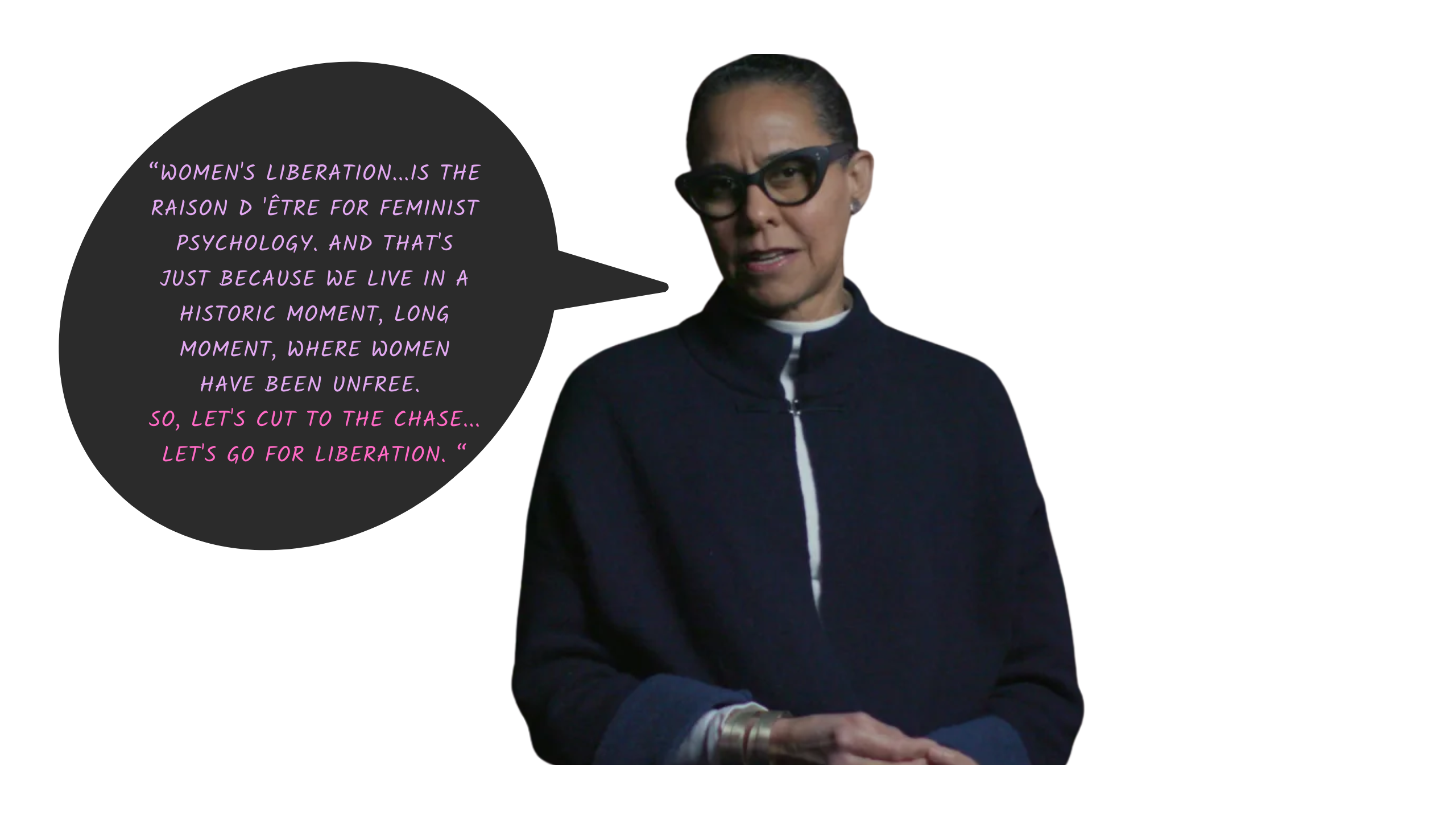
Boundary-Crossing as Method
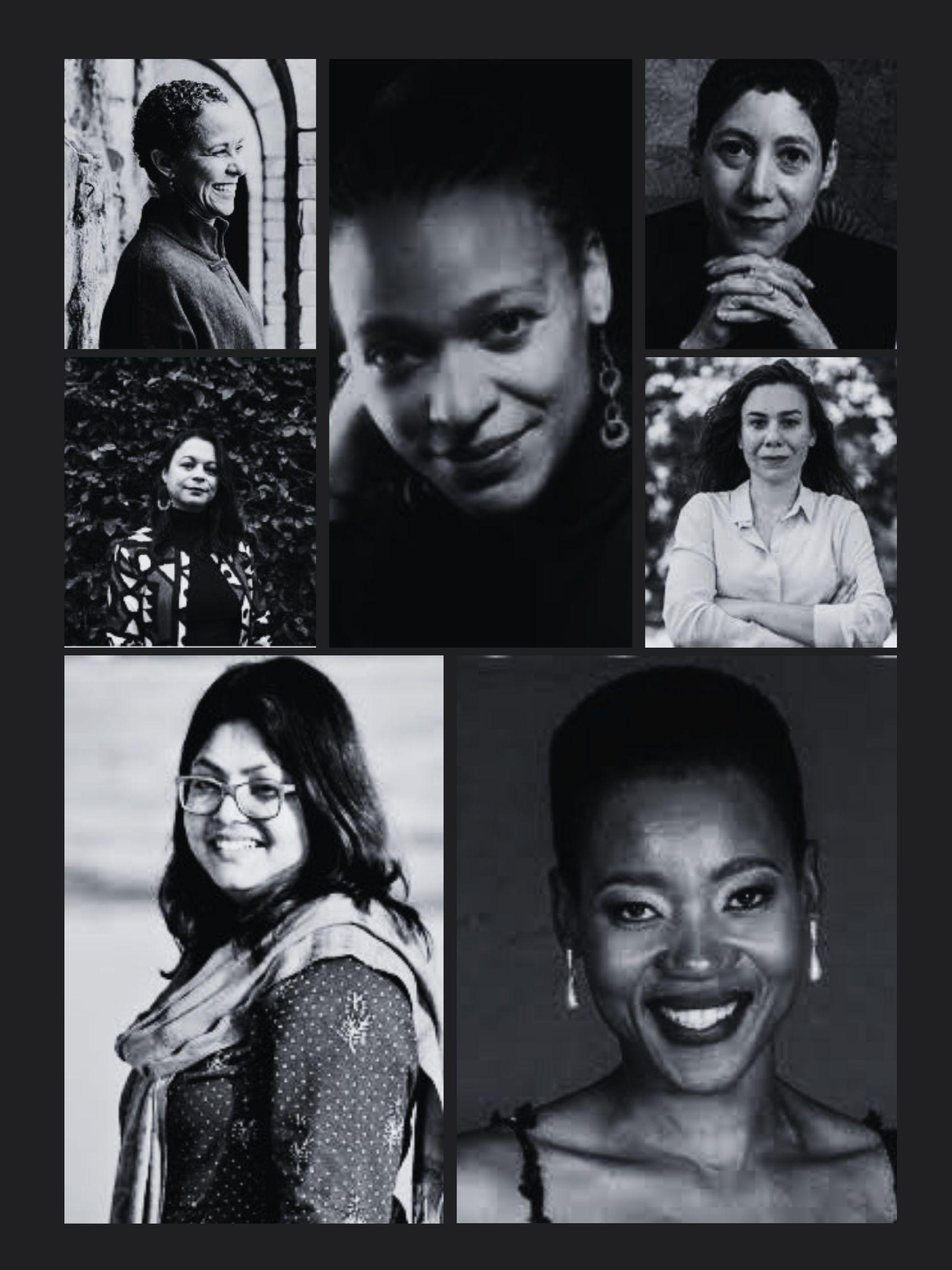
These scholars make methodological choices that refuse the boundaries the discipline conventionally maintains. The boundary-crossing is the method. And it shows up in at least three registers across the interviews:
They cross disciplines, moving between psychology, philosophy, community work, Caribbean thought, Pan-Africanism, feminism, social work, anthropology, psychiatry, spirituality, and the arts.
They cross forms: embroidery, film, photography, testimony, poetry, public radio, archives, pedagogy, and institutional strategy all become part of method.
They also cross the boundary between academy and community: community members become facilitators, interpreters become relational partners, public media reaches audiences journals cannot, and research relationships do not end with data collection.
Boundary-crossing is a refusal to be bound by disciplinary rigidity, and instead be responsive to what community and history requires.
“I think psychology needs resources that the Western concept of psychology does not contain.” - Bell, interview p. 6