
Urmitapa Dutta
Geopolitical and historical context
The effects of nearly 200 years of colonial rule under the British continue to shape Indian culture, politics, and ways of being. Beginning in 1757, the British violently took over India and what is now modern-day Pakistan to form a colony. During this time, Indian people were subjected to various forms of domination as Britain attempted to force them to become “civilized.” While India and today’s Pakistan were partitioned and gained independence in 1947, the legacy of colonialism persists. This is seen through its influence on the caste system, religious and cultural divisions, territorial conflicts, the introduction of western patriarchal structures, and the removal of traditional rights of women within Indian culture.
The experiences of the Miya people are one example of the enduring effects of colonialism. They are a majority Muslim group (a religious minority that faces prejudice in modern India) who migrated to the northeastern Indian state of Assam in the early 20th century, encouraged by British colonial authorities. Since their arrival, they have been subjected to the erasure of their language and culture, violent attacks, and more recently, disenfranchisement by the government. As both a religious and ethnic minority with migration roots outside of what is now considered India, they have been labeled as “other” or “foreigners”, a classification rooted in colonial ideologies.
Insights from the Interview
Urmitapa Dutta explores how colonialism continues to affect lives in India, particularly those of the Miya people, and herself. She employs unconventional methods in her work, including counterstorytelling and insurgent poetry.
Dutta’s path to feminism was deeply personal, grounded in her childhood experiences in Northeastern India, where she grew up in a context where the society is primarily matrilineal: “And that was very interesting because it's not that there wasn't any patriarchy, I mean, patriarchy just played out in a different way in a matrilineal context. But there was no dearth of seeing women who were in various kinds of leadership positions and in very unassuming ways.”
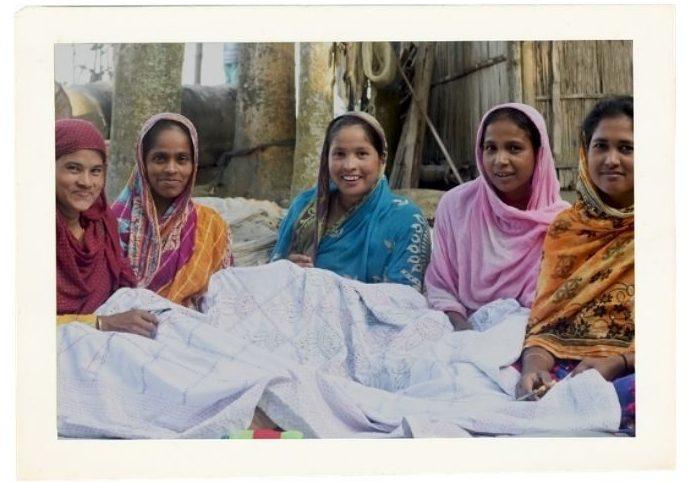
Urmitapa Dutta: “So, for me, what is so fundamental to decolonial feminism is that it is constantly working against those kinds of binaries, whatever that binary might be. It is certainly in relation to gender, but also recognizing that gender does not exist in and of itself, which means that any other binaries, whether it's in terms of the mind-body, the centre-periphery, Global South-Global North, there are constantly these binaries that colonialism has established that we have internalized and are constantly replicating. So, for me, fundamentally, decolonial feminism is about contesting and breaking down those binaries. And really sort of living into a different way of being that is not controlled, dictated by those kinds of binaries.”
Urmitapa Dutta: “For me, as a feminist, there is no circumstance where I can think that war is acceptable, that it is okay for a global imperialist power to go and attack another group…. And this also kind of goes back to abolition, to transformative justice, that there are so many ways in which collective punishment and retributive justice have been a part of Western feminist traditions, and also transplanted into many non-Western contexts as well. That is something that decolonial feminism tries to fight, because we're constantly thinking about, what is the world that we are struggling for?"
Her mother was also involved in local women’s groups, groups in which Dutta continues to participate today.
Through her relationship with feminism and awareness of psychology’s limitations, Dutta has adopted a decolonial feminist psychology, which she practices in both her research and teaching.
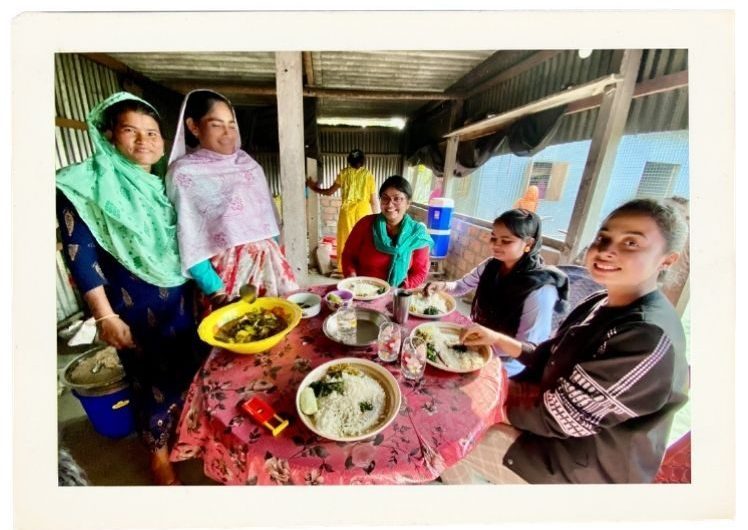
Dutta: "For me, I am always a woman of colour, feminist, and psychologist. So, there is no way that I can disentangle that part of me, of who I am, my experiences in the world from being a feminist or from being a psychologist. So, that's really for me, that's where all of my experiences get configured, in those kinds of interactions and those kinds of intersections, and it's from those spaces that my research happens.”
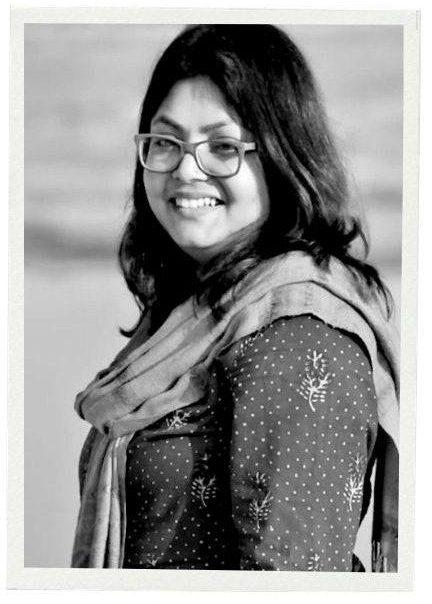
Credits
All images courtesy of interviewees.