
Puleng Segalo
Geopolitical and historical context
South Africa’s modern history is deeply marked by settler colonialism, racial capitalism, and apartheid, the legislated system of racial segregation and white minority rule that lasted from 1948 to 1994. Apartheid’s policies of forced removals, pass laws, and racially stratified education entrenched economic inequality and social exclusion, especially for Black South Africans. Gender oppression was deeply woven into this system: Black women endured the dual burden of racialized state violence and patriarchal control, both in public and private life. The post-apartheid period brought a new democratic constitution and national reconciliation initiatives such as the Truth and Reconciliation Commission (TRC). However, as Puleng Segalo stresses, while the TRC documented many gross human rights violations, it often failed to address the dehumanizing experience of women, and everyday violence, economic dispossession, and structural inequalities that persisted—particularly the gendered violence and socio-economic marginalization of Black South African women.
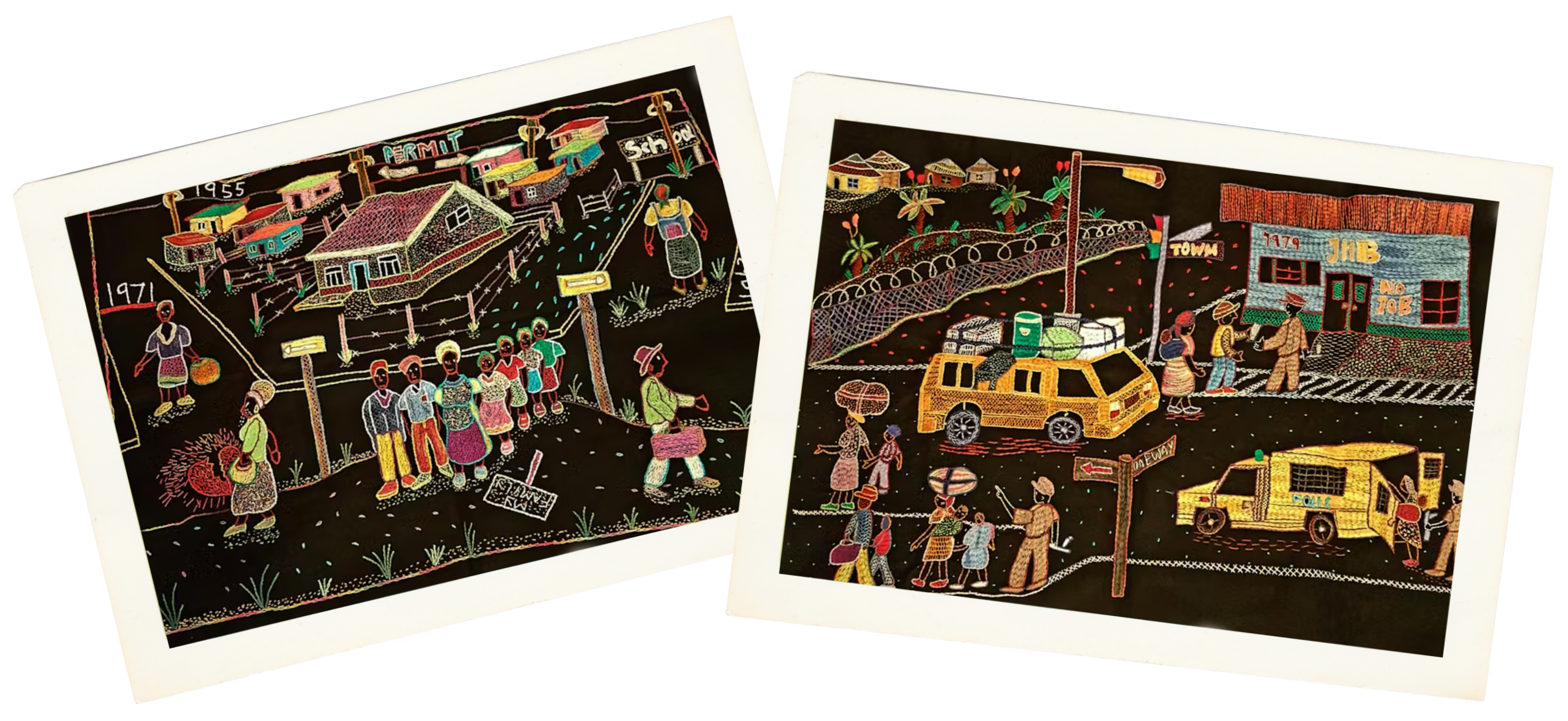
The persistence of high rates of gender-based violence, unemployment, and inadequate access to resources reveals how apartheid’s structural legacies remain deeply embedded in contemporary South African life. These political and social realities have shaped the terrain of higher education as well. Universities, though formally desegregated, continue to reflect apartheid’s intellectual hierarchies. It is within this context of unresolved historical injustice and epistemic exclusion that Segalo’s scholarship and praxis emerge, intervening in both public discourse and the discipline of psychology.
Insights from Interview
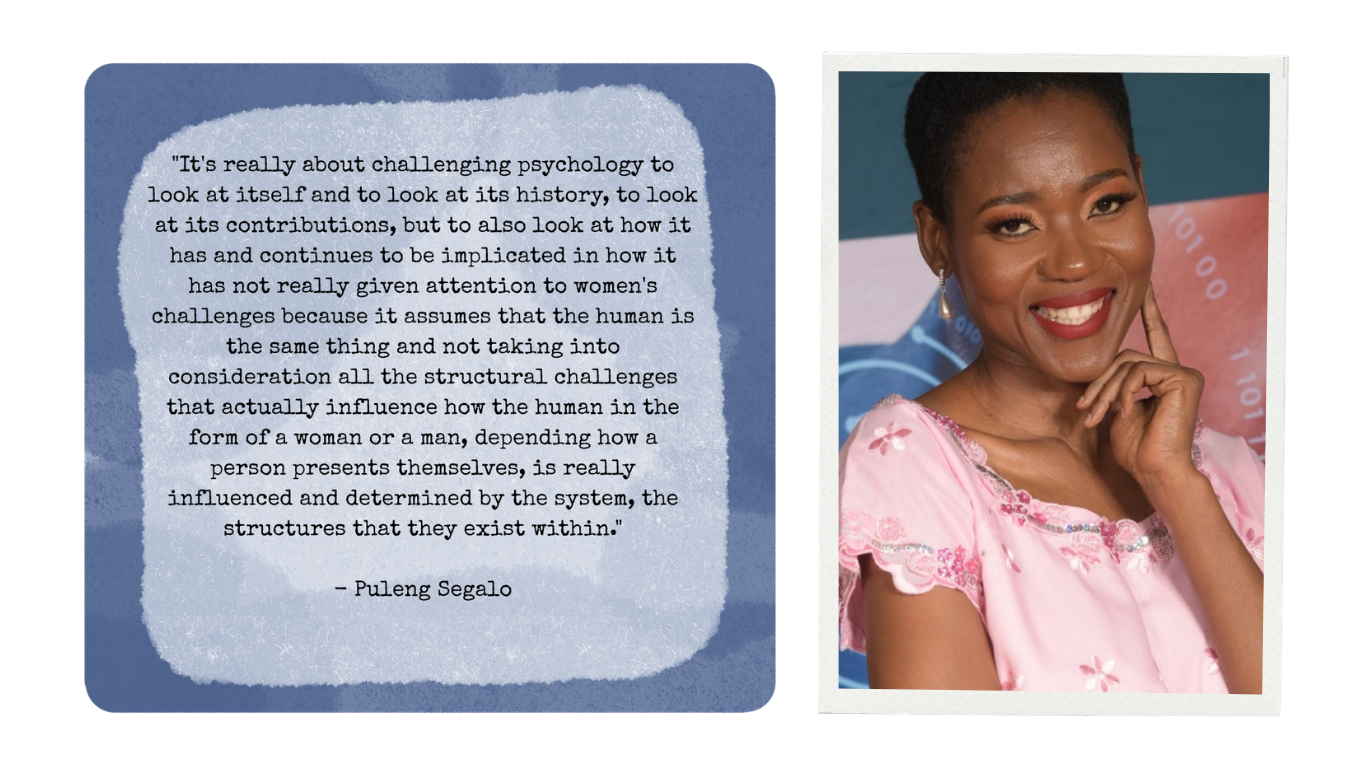
Puleng Segalo's journey to feminism and decoloniality is rooted in her upbringing, the context of her country's history, and, later still, the patriarchal and colonial echoes of her education. She grew up surrounded by strong female figures—her mother, grandmothers, and aunts—who embodied feminist values through their everyday acts of resistance and community engagement.
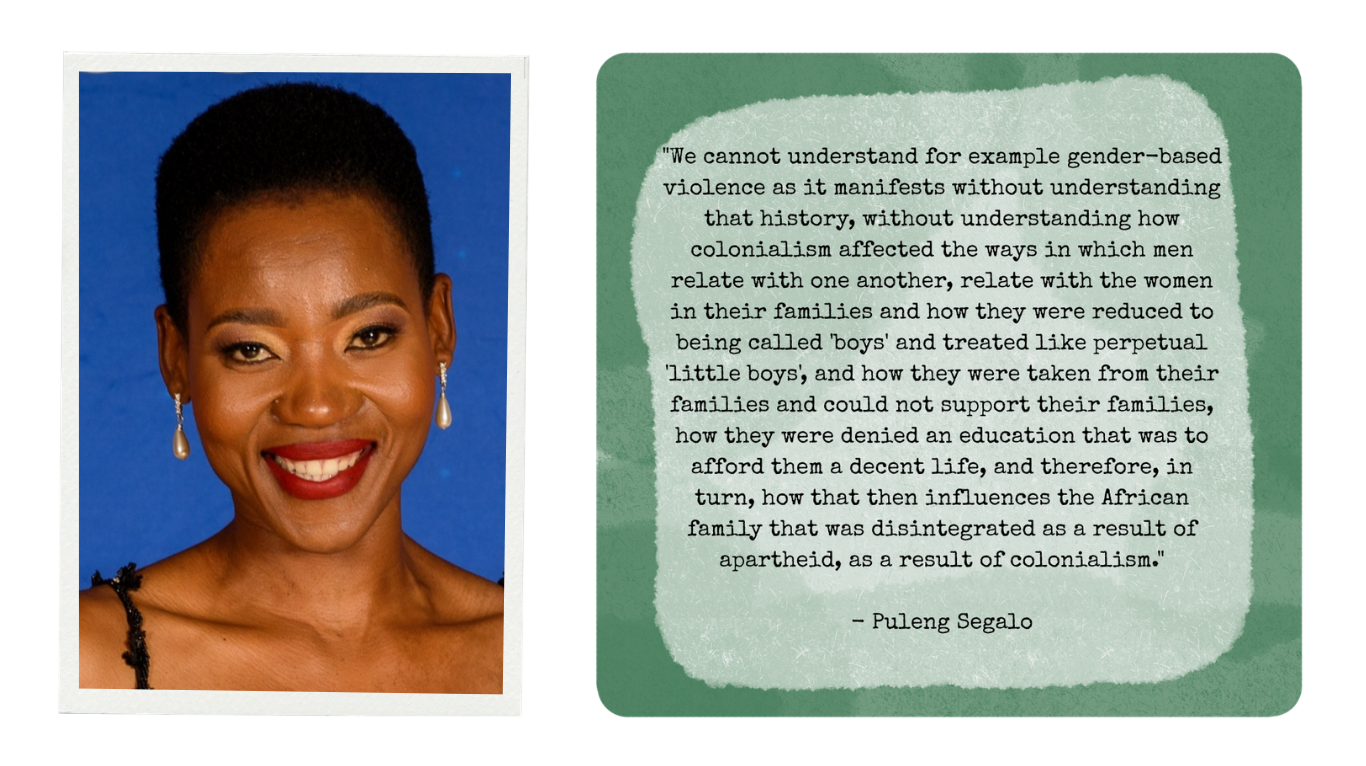
While the language of feminism did not figure strongly in Segalo's early life, graduate studies provided the conceptual tools to articulate and politicize these formative experiences. For Segalo, feminist psychology confronts the discipline's silence on women's gendered experiences; decoloniality takes this further, historicizing those experiences through colonialism and apartheid. She argues that the two are inseparable in practice. Her analysis of gendered violence is tied up in the colonial destruction of the African family. Segalo insists on recognizing men's violence against women, both in its real consequences on women's lives, and through the emasculation and dispossession colonialism imposed, adding historical-colonial nuance that must also be named and made structurally legible.
This challenges the treatment of gendered violence as separate from the broader structural forces that have (re)produced it. Segalo's understanding of African feminism follows: it is contextual and non-oppositional: women and men are in the struggle alongside one another, even as women hold men to account.
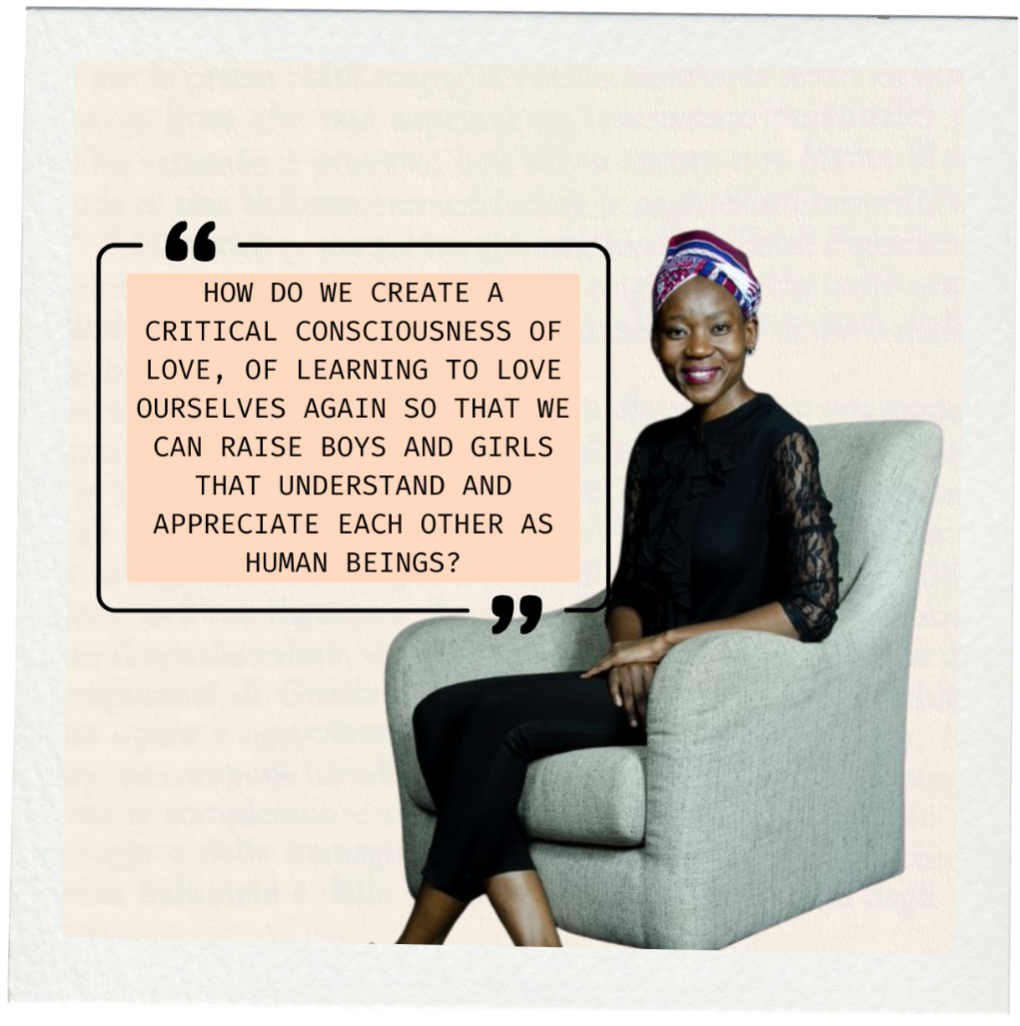
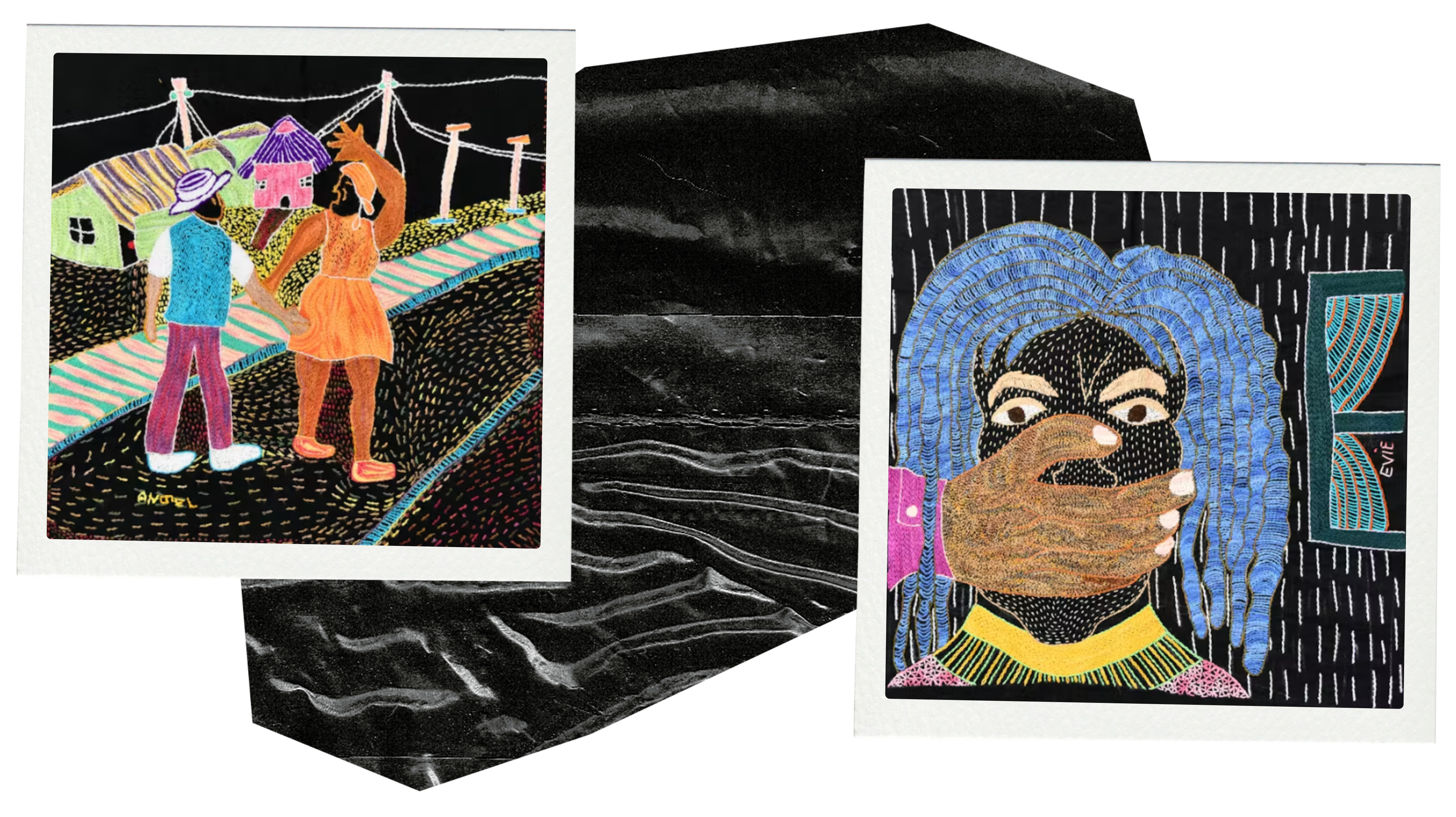
Segalo's embroidery work offers this exhibit a concrete example of decolonial feminist methodology in practice: knowledge produced with and by women in community, through a medium they already possess, directed back toward community dialogue rather than academic publication.
She describes her work as a "labour of love," challenging psychology because she believes in its potential. What she contributes to this exhibit is an insistence that decolonial feminist psychology must be rooted in specific histories, accountable to the communities it serves, and willing to name the full complexity of what colonialism has done, not only to women, but to the relational fabric of entire societies.
Credits
All images courtesy of interviewees.