
Profile
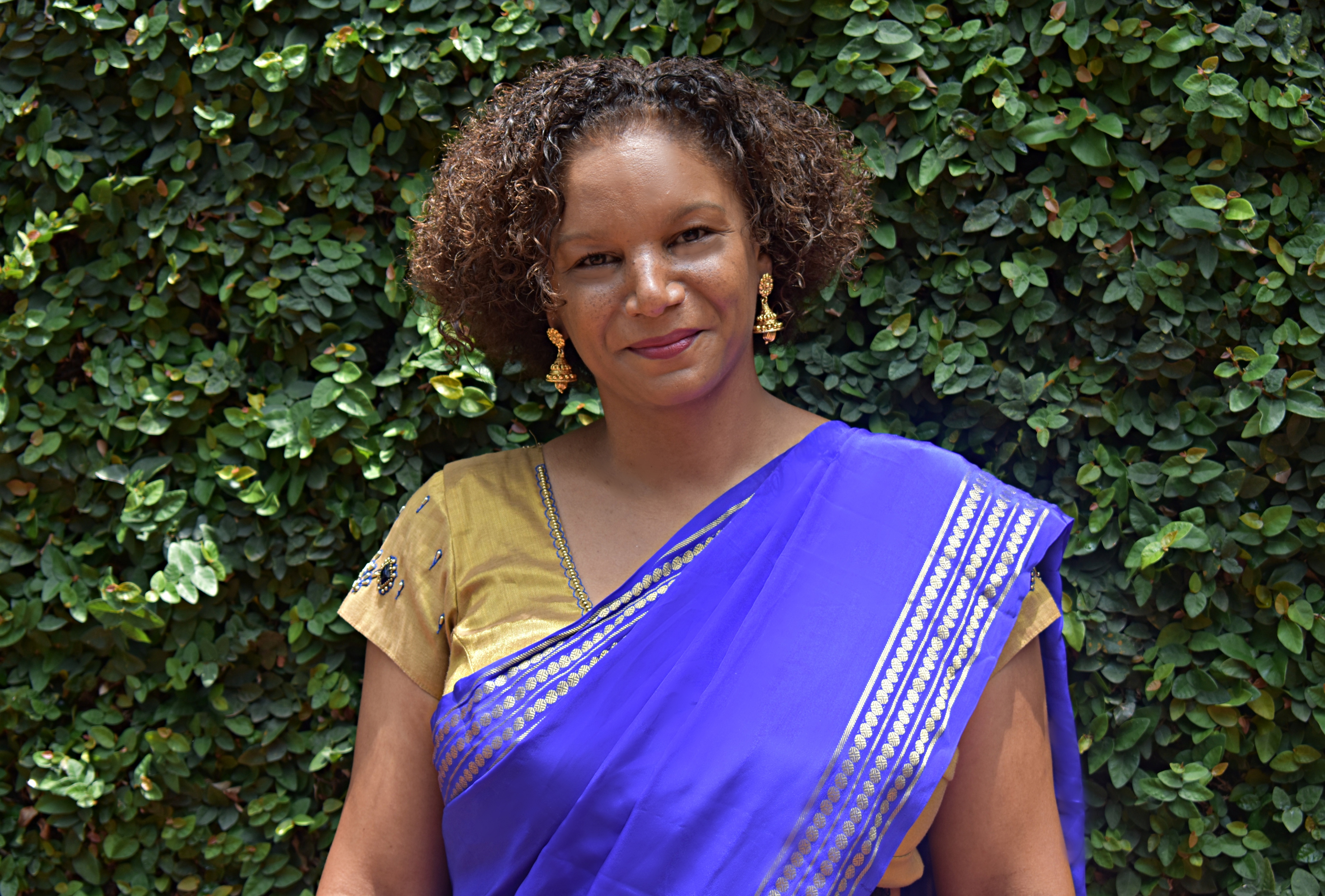
Dionne Stephens
Birth:
1972
Training Location(s):
PhD, University of Georgia (2003)
MA, University of Buffalo (1998)
BA, York University (1996)
Primary Affiliation(s):
Department of Psychology, Florida International University
Affiliated Faculty, University of Toronto, Centre for Critical Qualitative Health Research (CQ)
Affiliated Faculty, Flordia International University, Center for Women & Gender Studies
Affiliated Faculty, Florida International University, Latin American & Caribbean Studies
Psychology’s Feminist Voices Oral History Interview:
Career Focus:
Community-based research on health inequities; sexual health and gender and ethnic/racial identity development; intersectionality; popular-culture and media; Black womanhood.
Biography
Dionne Stephens was born on December 18th, 1972, in North York, Ontario. She was raised in a working-class, first-generation immigrant family from the Caribbean and was the first in her immediate family to attend college. Growing up, her parents instilled a strong emphasis on self-reliance. Her father, a sheet metal worker, insisted she and her sister learn to "change our tires, change our own oil, be able to take care of, pay bills on our own" to ensure their independence.
Dr. Stephens credits her education at St. Joseph Morrow’s Park Secondary School in Toronto, an all-girls school, for "setting the stage" for her later feminist identity. The absence of boys provided a unique "freedom to not have to deal with a lot of the things that the research shows that girls have to deal with during adolescence," as women held every leadership position from the math club to student government. In high school, Dr. Stephens interned at CHRY-FM, a radio station serving Toronto's Jane and Finch Community. At CHRY-FM, Dr. Stephens interviewed activists from various organizations, including the Black AIDS Alliance and the Association for New Canadians.
Dr. Stephens began her higher education at York University, pursuing an undergraduate degree in Individualized Studies. She characterized her time at York University as “fertile ground for understanding [intersectionality].” She was often out protesting and actively engaged with various student-activist organizations. She was a part of the Women’s Center, Black Students’ Union, Caribbean Students’ Union and was a news editor for the student paper, Excalibur. Her time in these positions allowed her to build bridges between the university and the broader community. While she did not yet have the terminology for intersectionality, she was living it through her involvement with these student organizations.
Her interest in health inequities was sparked by the 1990s HIV-AIDS crisis and its impact on the Black community. Her undergraduate thesis explored Black attitudes toward sexual health, a project in which, as she puts it, "I looked at women, I looked at [the] Black community, I looked at power, health and equities, I didn’t have that language at the time, but that’s what it was”.
Encouraged by her aunt, Dr. Stephens later went on to earn a Master’s in Women’s Studies at the University at Buffalo (SUNY). During this time, she interned at the Albion Women’s Prison, teaching sex education to incarcerated Black women. This experience deeply moved her, as she realized that many of the women were only there because of their circumstances. “If I had been born in their situation, I could have been sitting there." Despite her deep roots in the humanities, a mentor advised her to transition into a more traditional field for her doctoral work to maintain professional "power" and financial stability while staying "authentic" to her values. Remarkably, Dr. Stephens "took no psychology courses” until she did her PhD.
She applied to the Human Development program at the University of Georgia, where faculty member Sharon Price admitted her because she "had a fire in [her] belly and [she] thought critically". Her journey to becoming a psychologist was not without its challenges. She had to learn to read and write differently, and she was frequently told by research traditionalists that her interests in popular culture, community-based research, and qualitative research were not "real science." Despite the pushback, Dr. Stephens overcame this by running quantitative projects while simultaneously running qualitative “side projects” on topics such as hip-hop sexual scripts integrating feminist frameworks. Ultimately, this work, which integrated Womanist theory with traditional psychological frameworks, became the foundation of her career.
Dr. Stephens' deep love of feminist and community-based research is evident: “I never thought about being a faculty member, I want to be out in the community. My thing was I always wanted to translate the research in the community.” While pursuing tenure, she recalls needing to be strategic around pursuing community-based research, especially feminist research: “I had to be strategic about what I did. And I did not publish feminist work, it wasn’t like I avoided it, because I still did a chapter on reproductive justice, but I knew that what was going to be looked at, I better have a lot of that traditional stuff.”
Today, Dr. Stephens is a Professor of Psychology at Florida International University where she directs the Culture, Context, Health & Identities lab. In 2024, she co-authored the first textbook that focuses specifically on the psychology of Black girls and women, entitled The Psychology of Black Womanhood. Her career remains rooted in the activism of her youth, focusing on how sociocultural factors such as media and cultural beliefs influence health outcomes in disadvantaged communities. She continues to work with various community organizations such as Girl Power, women’s health organizations in Columbia and India, Affirming Youth, and many more. She remains most proud of her students, whom she mentors to develop the same independence her parents instilled in her growing up, stating: "I’m proud of my students in that when I look at my experience as a grad student, I can say that I gave my students the best of the best experience that I got."
Dr. Stephens has also published several articles that bring critical feminist analysis to popular culture. Many of her articles have provocative titles, such as “Hip hop honey or video ho: African American preadolescents’ understanding of female sexual scripts in hip hop culture (2007)”. These titles highlight her career-long effort to make her research accessible and relatable. This is also evident in her recently published textbook, where she incorporates contemporary concepts such as “situationships” and “weaves”, ensuring that the material resonates with community members, moving away from dense academic jargon yet staying rooted in academic research.
Dr. Stephens' story reminds us of the importance of authenticity and strategic resilience in the pursuit of social justice. Of psychology, she notes: “We’re the field that has the largest voice for reaching the most people”. For her amazing work and resilience, thank you Dr. Stephens!
By Aisha Kassim (2026)
To cite this article, see Credits
Selected Works
Few, A. L., Stephens, D. P., & Rouse-Arnett, M. (2003). Sister-to-sister talk: Transcending boundaries and challenges in qualitative research with Black women. Family Relations, 52(2), 205–215. https://doi.org/10.1111/j.1741-3729.2003.00205.x
Stephens, D. P., & Phillips, L. (2005). Integrating Black feminist thought into conceptual frameworks of African American adolescent women’s sexual scripting processes. Sexualities, Evolution & Gender, 7(1), 37–55. https://doi.org/10.1080/14616660500112725
Stephens, D. P., & Few, A. L. (2007). The effects of images of African American women in hip hop on early adolescents’ attitudes toward physical attractiveness and interpersonal relationships. Sex Roles, 56(3–4), 251–264. https://doi.org/10.1007/s11199-006-9145-5
Stephens, D. P., & Few, A. L. (2007). Hip hop honey or video ho: African American preadolescents’ understanding of female sexual scripts in hip hop culture. Sexuality & Culture, 11, 48–69. https://doi.org/10.1007/s12119-007-9012-8
Stephens, D. P., & Eaton, A. A. (2014). The influence of masculinity scripts on heterosexual Hispanic college men’s perceptions of female-initiated sexual coercion. Psychology of Men & Masculinity, 15(4), 387–396. https://doi.org/10.1037/a0034639
Stephens, D. P., & Eaton, A. A. (2017). Social networks influencing Black girls’ interpretations of Chris Brown’s violence against Rihanna. Journal of Black Psychology, 43(4), 381–408. https://doi.org/10.1177/0095798416648829
Stephens, D. P., Eaton, A. A., & Boyd, B. (2017). Hispanic college men's perceptions of appropriate strategies for initiating sexual intercourse with women. Sex Roles, 77(3–4), 239–253. https://doi.org/10.1007/s11199-016-0709-8
Stephens, D. P., & Eaton, A. A. (2020). Cultural factors influencing young adult Indian women's beliefs about disclosing domestic violence victimization. Journal of Social Issues, 76(2), 416–446. https://doi.org/10.1111/josi.12385
Dankoor, K., Stephens, D., & Bogt, T. T. (2023). Drip too hard? Commercial rap music and perceived masculinity ideals and actual self-evaluations among Black U.S. and Dutch adolescent men. Sexuality & Culture, 27, 57–77. https://doi.org/10.1007/s12119-022-10003-9
Dickens, D., & Stephens, D. (2024). Psychology of Black womanhood. Bloomsbury Publishing USA.
Photo Gallery
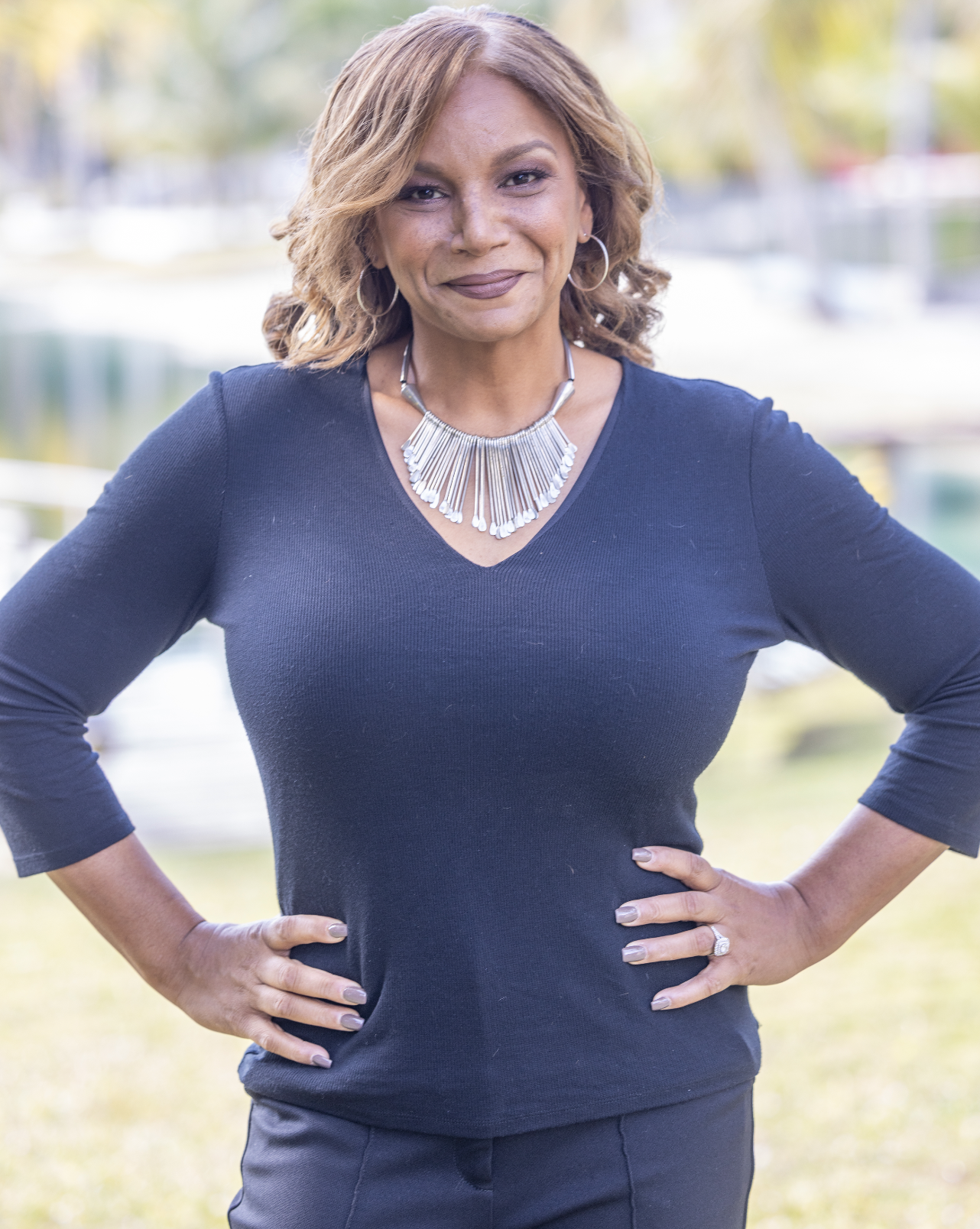
Dionne Stephens
Birth:
1972
Training Location(s):
PhD, University of Georgia (2003)
MA, University of Buffalo (1998)
BA, York University (1996)
Primary Affiliation(s):
Department of Psychology, Florida International University
Affiliated Faculty, University of Toronto, Centre for Critical Qualitative Health Research (CQ)
Affiliated Faculty, Flordia International University, Center for Women & Gender Studies
Affiliated Faculty, Florida International University, Latin American & Caribbean Studies
Psychology’s Feminist Voices Oral History Interview:
Career Focus:
Community-based research on health inequities; sexual health and gender and ethnic/racial identity development; intersectionality; popular-culture and media; Black womanhood.
Biography
Dionne Stephens was born on December 18th, 1972, in North York, Ontario. She was raised in a working-class, first-generation immigrant family from the Caribbean and was the first in her immediate family to attend college. Growing up, her parents instilled a strong emphasis on self-reliance. Her father, a sheet metal worker, insisted she and her sister learn to "change our tires, change our own oil, be able to take care of, pay bills on our own" to ensure their independence.
Dr. Stephens credits her education at St. Joseph Morrow’s Park Secondary School in Toronto, an all-girls school, for "setting the stage" for her later feminist identity. The absence of boys provided a unique "freedom to not have to deal with a lot of the things that the research shows that girls have to deal with during adolescence," as women held every leadership position from the math club to student government. In high school, Dr. Stephens interned at CHRY-FM, a radio station serving Toronto's Jane and Finch Community. At CHRY-FM, Dr. Stephens interviewed activists from various organizations, including the Black AIDS Alliance and the Association for New Canadians.
Dr. Stephens began her higher education at York University, pursuing an undergraduate degree in Individualized Studies. She characterized her time at York University as “fertile ground for understanding [intersectionality].” She was often out protesting and actively engaged with various student-activist organizations. She was a part of the Women’s Center, Black Students’ Union, Caribbean Students’ Union and was a news editor for the student paper, Excalibur. Her time in these positions allowed her to build bridges between the university and the broader community. While she did not yet have the terminology for intersectionality, she was living it through her involvement with these student organizations.
Her interest in health inequities was sparked by the 1990s HIV-AIDS crisis and its impact on the Black community. Her undergraduate thesis explored Black attitudes toward sexual health, a project in which, as she puts it, "I looked at women, I looked at [the] Black community, I looked at power, health and equities, I didn’t have that language at the time, but that’s what it was”.
Encouraged by her aunt, Dr. Stephens later went on to earn a Master’s in Women’s Studies at the University at Buffalo (SUNY). During this time, she interned at the Albion Women’s Prison, teaching sex education to incarcerated Black women. This experience deeply moved her, as she realized that many of the women were only there because of their circumstances. “If I had been born in their situation, I could have been sitting there." Despite her deep roots in the humanities, a mentor advised her to transition into a more traditional field for her doctoral work to maintain professional "power" and financial stability while staying "authentic" to her values. Remarkably, Dr. Stephens "took no psychology courses” until she did her PhD.
She applied to the Human Development program at the University of Georgia, where faculty member Sharon Price admitted her because she "had a fire in [her] belly and [she] thought critically". Her journey to becoming a psychologist was not without its challenges. She had to learn to read and write differently, and she was frequently told by research traditionalists that her interests in popular culture, community-based research, and qualitative research were not "real science." Despite the pushback, Dr. Stephens overcame this by running quantitative projects while simultaneously running qualitative “side projects” on topics such as hip-hop sexual scripts integrating feminist frameworks. Ultimately, this work, which integrated Womanist theory with traditional psychological frameworks, became the foundation of her career.
Dr. Stephens' deep love of feminist and community-based research is evident: “I never thought about being a faculty member, I want to be out in the community. My thing was I always wanted to translate the research in the community.” While pursuing tenure, she recalls needing to be strategic around pursuing community-based research, especially feminist research: “I had to be strategic about what I did. And I did not publish feminist work, it wasn’t like I avoided it, because I still did a chapter on reproductive justice, but I knew that what was going to be looked at, I better have a lot of that traditional stuff.”
Today, Dr. Stephens is a Professor of Psychology at Florida International University where she directs the Culture, Context, Health & Identities lab. In 2024, she co-authored the first textbook that focuses specifically on the psychology of Black girls and women, entitled The Psychology of Black Womanhood. Her career remains rooted in the activism of her youth, focusing on how sociocultural factors such as media and cultural beliefs influence health outcomes in disadvantaged communities. She continues to work with various community organizations such as Girl Power, women’s health organizations in Columbia and India, Affirming Youth, and many more. She remains most proud of her students, whom she mentors to develop the same independence her parents instilled in her growing up, stating: "I’m proud of my students in that when I look at my experience as a grad student, I can say that I gave my students the best of the best experience that I got."
Dr. Stephens has also published several articles that bring critical feminist analysis to popular culture. Many of her articles have provocative titles, such as “Hip hop honey or video ho: African American preadolescents’ understanding of female sexual scripts in hip hop culture (2007)”. These titles highlight her career-long effort to make her research accessible and relatable. This is also evident in her recently published textbook, where she incorporates contemporary concepts such as “situationships” and “weaves”, ensuring that the material resonates with community members, moving away from dense academic jargon yet staying rooted in academic research.
Dr. Stephens' story reminds us of the importance of authenticity and strategic resilience in the pursuit of social justice. Of psychology, she notes: “We’re the field that has the largest voice for reaching the most people”. For her amazing work and resilience, thank you Dr. Stephens!
By Aisha Kassim (2026)
To cite this article, see Credits
Selected Works
Few, A. L., Stephens, D. P., & Rouse-Arnett, M. (2003). Sister-to-sister talk: Transcending boundaries and challenges in qualitative research with Black women. Family Relations, 52(2), 205–215. https://doi.org/10.1111/j.1741-3729.2003.00205.x
Stephens, D. P., & Phillips, L. (2005). Integrating Black feminist thought into conceptual frameworks of African American adolescent women’s sexual scripting processes. Sexualities, Evolution & Gender, 7(1), 37–55. https://doi.org/10.1080/14616660500112725
Stephens, D. P., & Few, A. L. (2007). The effects of images of African American women in hip hop on early adolescents’ attitudes toward physical attractiveness and interpersonal relationships. Sex Roles, 56(3–4), 251–264. https://doi.org/10.1007/s11199-006-9145-5
Stephens, D. P., & Few, A. L. (2007). Hip hop honey or video ho: African American preadolescents’ understanding of female sexual scripts in hip hop culture. Sexuality & Culture, 11, 48–69. https://doi.org/10.1007/s12119-007-9012-8
Stephens, D. P., & Eaton, A. A. (2014). The influence of masculinity scripts on heterosexual Hispanic college men’s perceptions of female-initiated sexual coercion. Psychology of Men & Masculinity, 15(4), 387–396. https://doi.org/10.1037/a0034639
Stephens, D. P., & Eaton, A. A. (2017). Social networks influencing Black girls’ interpretations of Chris Brown’s violence against Rihanna. Journal of Black Psychology, 43(4), 381–408. https://doi.org/10.1177/0095798416648829
Stephens, D. P., Eaton, A. A., & Boyd, B. (2017). Hispanic college men's perceptions of appropriate strategies for initiating sexual intercourse with women. Sex Roles, 77(3–4), 239–253. https://doi.org/10.1007/s11199-016-0709-8
Stephens, D. P., & Eaton, A. A. (2020). Cultural factors influencing young adult Indian women's beliefs about disclosing domestic violence victimization. Journal of Social Issues, 76(2), 416–446. https://doi.org/10.1111/josi.12385
Dankoor, K., Stephens, D., & Bogt, T. T. (2023). Drip too hard? Commercial rap music and perceived masculinity ideals and actual self-evaluations among Black U.S. and Dutch adolescent men. Sexuality & Culture, 27, 57–77. https://doi.org/10.1007/s12119-022-10003-9
Dickens, D., & Stephens, D. (2024). Psychology of Black womanhood. Bloomsbury Publishing USA.