
Profile
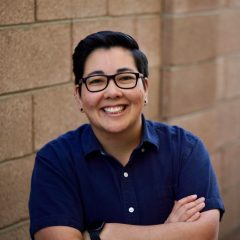
Em Matsuno
Birth:
1990
Training Location(s):
PhD, University of California, Santa Barbara (2019)
MA, University of California, Santa Barbara (2015)
BA, University of Colorado, Boulder (2013)
Hons. BA, University of Colorado, Boulder (2013)
Primary Affiliation(s):
Associate Professor, School of Counseling and Counseling Psychology, Arizona State University (2026–Present)
Assistant Professor, School of Counseling and Counseling Psychology, Arizona State University (2021–2026)
Psychology’s Feminist Voices Oral History Interview:
Other Media:
Taboo Science Interview: “Nonbinary 101: Beyond the Binary”
Liberation Now Interview: “We are not a curse, we are a gift: Trans and nonbinary joy and its role in liberation”
The Parent Advocate Podcast Interview: “Come again. Say what?”
Career Focus:
Minority stress; trans and nonbinary health, wellbeing, and resilience
Biography
Em Matsuno grew up in Laramie, Wyoming, a rural, conservative and religious community. Matsuno cites their mother, a law professor involved in the second-wave feminist and civil rights movement, as their earliest feminist influence. In addition, the egalitarian relationship of Matsuno's mother and father further challenged gender roles. Unlike many of their peers, Matsuno observed their parents sharing household responsibilities such as cooking and cleaning. Despite these important family influences, as a young person Matsuno often felt excluded from peer groups because of their queerness and race.
In Laramie, there was little representation of same-sex relationships. Matsuno recalls that the first time they learned “what it was to be gay was learning about the murder of a gay person [Matthew Shepard]”. Matsuno was also one of the few people of color or biracial people in their community; their mother is white and their father is Japanese. At the age of six, Matsuno and their parents moved to Japan for a year. Although they were surrounded by people who looked more similar to them, being American made Matsuno feel like an outsider in a different way. Matsuno notes that, for many, “it’s uncomfortable to not have things in black or white”.
In middle school and high school, Matsuno sought belonging and acceptance in an evangelical Christian church. Matsuno and their friend group attended Sunday school at their church, where they were taught that homosexuality was a sin. For Matsuno, who was still exploring their sexuality, these messages contributed to significant internalized stigma and shame.
At the University of Colorado Boulder, where they studied psychology and music, Matsuno felt increasingly able to embrace their queer identity due in part to the presence of a strong lesbian community and a diverse group of friends on campus. Alongside this supportive campus culture, attending therapy at the college counseling center helped further affirm their queer identity and encouraged them to pursue a career in mental health care. Matsuno began this work by volunteering at the college counseling center, where counselors offered guidance about entering the field.
In graduate school, where Matsuno studied counseling psychology, their mentor, Dr. Tania Israel, encouraged them to take a teaching assistantship at the Department of Feminist Studies. There, Matsuno encountered the work of feminist scholars, including Audre Lorde and Gloria Anzaldúa. Israel also introduced Matsuno to the Association of Women in Psychology, where they were able to engage more deeply with feminist approaches. During this period, Matsuno also served as a camp counselor at the Community Leadership Institute, where they taught high school students about systems of power and oppression. In particular, they helped facilitate “privilege walks”, in which students would hold “hands in a line and then based on the statement, you move a step forward or move a step backward”, making the effects of social identities and inequalities more tangible. For Matsuno, these experiences played a pivotal role in developing an intersectional, reflexive and feminist-informed approach that would later inform their scholarship.
In 2019, Matsuno completed their Ph.D. in clinical, counseling, and school psychology at the University of California, Santa Barbara. Around this time, topics related to Matsuno's research, namely, nonbinary and trans identities, were acquiring more visibility in academia. For Matsuno, this broader scholarly shift was professionally beneficial; however, on some occasions, this interest also felt tokenistic. At times, Matsuno felt that colleagues drew on their expertise superficially, such as asking them to proofread manuscripts simply to ensure that they were not “transphobic”. In other words, despite growing interest in trans issues, this did not necessarily entail meaningful engagement with trans scholarship.
Matsuno sought to build a strong community within the field of counseling psychology. Near the end of their graduate training, Matsuno independently organized a trans and nonbinary meetup at the American Psychological Association convention. They also created a Facebook community for trans and nonbinary students and professionals, which quickly grew to around 200 members. These experiences establishing networks among marginalized students and professionals helped lay the foundation for their later work as a professor and mentor.
Matsuno is currently an associate professor at Arizona State University in Tempe, Arizona, where they direct the Empowerment Lab. Their research focuses on two-spirit, trans, and nonbinary (2STNB) mental health experiences, with a focus on minority stress and resilience. Drawing on their own experiences as a graduate student, Matsuno emphasizes the value of mentorship: while the research produced in the lab is important, so too is cultivating a strong and supportive community among students. Matsuno has also authored several collaborative papers addressing ways to better support trans and nonbinary graduate students, who remain underrepresented within psychology.
Throughout their academic and professional trajectory in psychology, Matsuno has witnessed substantial growth in feminist, Black, Indigenous, and People of Color (BIPOC), and queer representation. Yet, they continue to see trans and nonbinary people pushed to the margins of feminist spaces. Matsuno acknowledges the importance of protecting spaces for people with shared experiences; however, they also argue that “to completely silo communities is also a disservice”. Matsuno finds that “there is so much overlap [and] feminism can be pushed forward by trans and nonbinary people because we are literally breaking the binary down”.
Matsuno hopes psychology will continue moving toward a more inclusive discipline in which people from different backgrounds can collaborate and shape a stronger future for the field.
By Baldev Sidhu (2026)
To cite this article, see Credits
Selected Works
Matsuno, E., Puckett, J. A., Huynh, K. D., Clements, Z., & Galupo, M. P. (2026). Development and psychometric evaluation of the transgender and nonbinary People of Color Resilience Scale. Psychology of Sexual Orientation and Gender Diversity. Advance online publication. https://doi.org/10.1037/sgd0000891
Matsuno, E., Bricker, N. L., Collazo, E., Huynh, K. D., Mohr, R., Jr., Colson, A. E., & Balsam, K. F. (2026). Development and validation of the nonbinary distal minority stressors, proximal minority stressors, and resilience scales. Psychology of Sexual Orientation and Gender Diversity, 13(1), 35–53. https://doi.org/10.1037/sgd0000719
Matsuno, E., Huynh, K. D., & Abreu, R. L. (2024). Development and validation of the Trans- and Nonbinary-Affirming Parental Practices (TAPP) measure. Journal of Family Psychology. Advance online publication. https://doi.org/10.1037/fam0001205
Matsuno, E., Hashtpari, H., Domínguez, S., Jr., Maroney, M. R., Gonzalez, K. A., & Knutson, D. (2023). “There’s no real roadmap that I know of”: Experiences of transgender and nonbinary graduate students in counseling psychology programs. Journal of Counseling Psychology, 70(1), 16–29. https://doi.org/10.1037/cou0000647
Matsuno, E., Bricker, N. L., Collazo, E. N., Mohr, R., Jr., & Balsam, K. F. (2024). “The default is just going to be getting misgendered”: Minority stress experiences among nonbinary adults. Psychology of Sexual Orientation and Gender Diversity, 11(2), 202–214. https://doi.org/10.1037/sgd0000607
Matsuno, E., McConnell, E., Dolan, C. V., & Israel, T. (2022). “I am fortunate to have a transgender child”: An investigation into the barriers and facilitators to support among parents of trans and nonbinary youth. LGBTQ+ Family: An Interdisciplinary Journal, 18(1), 1–19. https://doi.org/10.1080/1550428X.2021.1991541
Matsuno, E., & Israel, T. (2021). The Parent Support Program: Development and Acceptability of an Online Intervention Aimed at Increasing Supportive Behaviors Among Parents of Trans Youth. Journal of GLBT Family Studies, 17(5), 413–431. https://doi.org/10.1080/1550428X.2020.1868369
Matsuno, E. (2019). Nonbinary-affirming psychological interventions. Cognitive and Behavioral Practice, 26(4), 617–628. https://doi.org/10.1016/j.cbpra.2018.09.003
Matsuno, E., & Israel, T. (2018). Psychological Interventions Promoting Resilience Among Transgender Individuals: Transgender Resilience Intervention Model (TRIM). The Counseling Psychologist,46(5) 632–655. https://doi.org/10.1177/0011000018787261
Matsuno, E., & Budge, S. L. (2017). Non-binary/genderqueer identities: A critical review of the literature. Current Sexual Health Reports, 9(3), 116–120. https://doi.org/10.1007/s11930-017-0111-8