
Profile
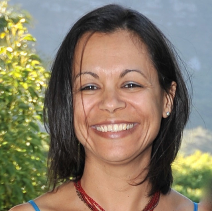
Floretta Boonzaier
Birth:
1970
Training Location(s):
PhD, University of Cape Town (2005)
MA, University of Cape Town (2001)
BS, University of Cape Town (1999)
BA, University of Cape Town (1998)
Primary Affiliation(s):
University of Cape Town, Cape Town, South Africa (2004–Present)
Psychology’s Feminist Voices Oral History Interview:
Other Media:
Floretta Boonzaier Faculty Profile from University of Cape Town
Hub for Decolonial Feminist Psychologies in Africa
Career Focus:
Feminist, critical and postcolonial psychologies; subjectivity; gendered violence; qualitative psychologies; narrative, discursive, and participatory methods
Biography
Growing up in a Black community during apartheid in Cape Town, South Africa, Dr. Floretta Boonzaier “learned” the practice of intersectional feminism long before she learned about the academic term. Boonzaier grounds her feminism in the teachings of the strong women in her community, such as her mom, who ‘held it all together’ in the face of discrimination and state sponsored violence, and in witnessing the women in her community resist apartheid.
Boonzaier completed her undergraduate degree at a historically Black institution in Cape Town, and her introduction to Psychology was critical and feminist in nature. Many of her mentors, now colleagues in the discipline, were involved in the anti-apartheid movement, which helped her find her place in the discipline early in her career. These mentors shaped the trajectory of Boonzaier’s career, as they put race and feminism in the foreground of her early training in Psychology. While she had intended to become a clinician, Boonzaier realized that as an academic she could better explore and understand the collective trauma she witnessed in her community caused by apartheid, including the effects of racialized class distinctions and experiences of displacement.
Although Boonzaier knew early on what excited her within Psychology, finding her place in academia was challenging due to the alienation and exclusion she felt at the beginning of her career as one of the few women of colour moving to a historically white institution. This experience foundationally shaped her work. In response, she co-created inclusive and transformational spaces within the institution, spaces she wished had existed when she was a student, such as the Hub for Decolonial Feminist Psychologies in Africa. ‘The Hub’ was created in collaboration with Shose Kessi, and Boonzaier describes it as a “student driven critical space.” This initiative was born out of frustrations with the hollowness of institutional discourses of transformation and racial inclusivity at the University of Cape Town, frustrations that also led Boonzaier to publicly denounce the institution’s membership in the Black Academic Caucus. Boonzaier describes the Hub as a “necessary space” that arrived in a “necessary time” at the University of Cape Town. Rather than “working in silos,” the Hub intentionally brings together different disciplines to enrich conversations around complex topics. While Boonzaier considers herself a mentor in the more traditional sense; in terms of supervising graduate students, she also considers the collaborative nature of the Hub as another unique form of mentorship.
When discussing the definition of decolonial feminist psychology, Boonzaier emphasizes the importance of intersectionality, and how history is foundational to the creation of particular social identities, as well as the importance of studying how histories resurface in the present. She highlights how a decolonial feminist framework in academia foregrounds social justice in research, counters traditional forms of knowledge production, and centres ethics beyond an institutional requirement and as a reflexive, expansive practice. Boonzaier emphasizes the importance of using a decolonial feminist lens when examining complex topics, such as violence against Black women and trauma as a concept in Psychology and denounces the lack of criticality in corresponding academic and media discourses.
According to Boonzaier, “even the questions we ask have ethical implications.” She cautions that researchers can unintentionally reproduce the very discourses they seek to challenge. While she believes that “methodological possibilities are vast” when conducting decolonial feminist work, Boonzaier emphasizes the importance of always “opening up discursive space” throughout the entire research process. In her view, one of the key contributions of decolonial feminist psychology is that it allows us to hold complexity in subjectivity. However, Boonzaier emphasizes that self-interrogation and self-reflective work are still needed within feminist work in Psychology.
For Boonzaier, her biggest accomplishment is being able to conduct work that is meaningful to her personally without apology, all while “finding hope and healing while doing work on violence and trauma,” as well as being able to bring her “full self” into her work. Her advice to young feminist academics is to “find the work that moves you and try to understand why it moves you,” all while “finding community and building community where you don't find it.” Boonzaier also emphasizes the importance of accountability—both to the university and to oneself—while maintaining healthy boundaries, recognizing that being an academic is only one of her many identities.
By Maria Jose Pernas Rodriguez
(2025)
To cite this article, see Credits
Selected Works
Boonzaier, F., & van Niekerk, T. (Eds.). (2019). Decolonial feminist community psychology. Springer Nature Switzerland AG.
Kessi, S., & Boonzaier, F. (2018). Centre/ing decolonial feminist psychology in Africa. South African Journal of Psychology, 48(3), 299–309.
McCloskey, L. A., Boonzaier, F., Steinbrenner, S. Y., & Hunter, T. (2016). Determinants of intimate partner violence in sub-Saharan Africa: A review of prevention and intervention programs. Partner Abuse, 7(3), 277–315.
Boonzaier, F. & Zway, M. (2015). Resisting discrimination and negotiating safety: Young black lesbian and bisexual women represent their experiences through Photovoice. African Safety Promotion: A Journal of Injury and Violence Prevention, 13, 7–29.
Aulette-Root-Toyer, A., Boonzaier, F. & Aulette, J. (2014). South African Women Living with HIV: Global Lessons from Local Voices. Indiana University Press.
Boonzaier, F. A. & van Schalkwyk, S. (2011). Narrative Possibilities: Poor women of color and the complexities of intimate partner violence. Violence Against Women, 17, 267–286.
Boonzaier, F. (2008). 'If the man says you must sit, then you must sit': The relational construction of woman abuse: Gender, subjectivity and violence. Feminism & Psychology, 18(2), 183–206.
Boonzaier, F., & De La Rey, C. (2003). "He's a man, and I'm a woman": Cultural constructions of masculinity and femininity in South African women's narratives of violence. Violence Against Women, 9(8), 1003–1029.
Photo Gallery
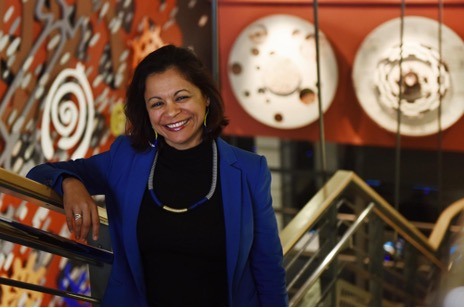
Floretta Boonzaier
Birth:
1970
Training Location(s):
PhD, University of Cape Town (2005)
MA, University of Cape Town (2001)
BS, University of Cape Town (1999)
BA, University of Cape Town (1998)
Primary Affiliation(s):
University of Cape Town, Cape Town, South Africa (2004–Present)
Psychology’s Feminist Voices Oral History Interview:
Other Media:
Floretta Boonzaier Faculty Profile from University of Cape Town
Hub for Decolonial Feminist Psychologies in Africa
Career Focus:
Feminist, critical and postcolonial psychologies; subjectivity; gendered violence; qualitative psychologies; narrative, discursive, and participatory methods
Biography
Growing up in a Black community during apartheid in Cape Town, South Africa, Dr. Floretta Boonzaier “learned” the practice of intersectional feminism long before she learned about the academic term. Boonzaier grounds her feminism in the teachings of the strong women in her community, such as her mom, who ‘held it all together’ in the face of discrimination and state sponsored violence, and in witnessing the women in her community resist apartheid.
Boonzaier completed her undergraduate degree at a historically Black institution in Cape Town, and her introduction to Psychology was critical and feminist in nature. Many of her mentors, now colleagues in the discipline, were involved in the anti-apartheid movement, which helped her find her place in the discipline early in her career. These mentors shaped the trajectory of Boonzaier’s career, as they put race and feminism in the foreground of her early training in Psychology. While she had intended to become a clinician, Boonzaier realized that as an academic she could better explore and understand the collective trauma she witnessed in her community caused by apartheid, including the effects of racialized class distinctions and experiences of displacement.
Although Boonzaier knew early on what excited her within Psychology, finding her place in academia was challenging due to the alienation and exclusion she felt at the beginning of her career as one of the few women of colour moving to a historically white institution. This experience foundationally shaped her work. In response, she co-created inclusive and transformational spaces within the institution, spaces she wished had existed when she was a student, such as the Hub for Decolonial Feminist Psychologies in Africa. ‘The Hub’ was created in collaboration with Shose Kessi, and Boonzaier describes it as a “student driven critical space.” This initiative was born out of frustrations with the hollowness of institutional discourses of transformation and racial inclusivity at the University of Cape Town, frustrations that also led Boonzaier to publicly denounce the institution’s membership in the Black Academic Caucus. Boonzaier describes the Hub as a “necessary space” that arrived in a “necessary time” at the University of Cape Town. Rather than “working in silos,” the Hub intentionally brings together different disciplines to enrich conversations around complex topics. While Boonzaier considers herself a mentor in the more traditional sense; in terms of supervising graduate students, she also considers the collaborative nature of the Hub as another unique form of mentorship.
When discussing the definition of decolonial feminist psychology, Boonzaier emphasizes the importance of intersectionality, and how history is foundational to the creation of particular social identities, as well as the importance of studying how histories resurface in the present. She highlights how a decolonial feminist framework in academia foregrounds social justice in research, counters traditional forms of knowledge production, and centres ethics beyond an institutional requirement and as a reflexive, expansive practice. Boonzaier emphasizes the importance of using a decolonial feminist lens when examining complex topics, such as violence against Black women and trauma as a concept in Psychology and denounces the lack of criticality in corresponding academic and media discourses.
According to Boonzaier, “even the questions we ask have ethical implications.” She cautions that researchers can unintentionally reproduce the very discourses they seek to challenge. While she believes that “methodological possibilities are vast” when conducting decolonial feminist work, Boonzaier emphasizes the importance of always “opening up discursive space” throughout the entire research process. In her view, one of the key contributions of decolonial feminist psychology is that it allows us to hold complexity in subjectivity. However, Boonzaier emphasizes that self-interrogation and self-reflective work are still needed within feminist work in Psychology.
For Boonzaier, her biggest accomplishment is being able to conduct work that is meaningful to her personally without apology, all while “finding hope and healing while doing work on violence and trauma,” as well as being able to bring her “full self” into her work. Her advice to young feminist academics is to “find the work that moves you and try to understand why it moves you,” all while “finding community and building community where you don't find it.” Boonzaier also emphasizes the importance of accountability—both to the university and to oneself—while maintaining healthy boundaries, recognizing that being an academic is only one of her many identities.
By Maria Jose Pernas Rodriguez
(2025)
To cite this article, see Credits
Selected Works
Boonzaier, F., & van Niekerk, T. (Eds.). (2019). Decolonial feminist community psychology. Springer Nature Switzerland AG.
Kessi, S., & Boonzaier, F. (2018). Centre/ing decolonial feminist psychology in Africa. South African Journal of Psychology, 48(3), 299–309.
McCloskey, L. A., Boonzaier, F., Steinbrenner, S. Y., & Hunter, T. (2016). Determinants of intimate partner violence in sub-Saharan Africa: A review of prevention and intervention programs. Partner Abuse, 7(3), 277–315.
Boonzaier, F. & Zway, M. (2015). Resisting discrimination and negotiating safety: Young black lesbian and bisexual women represent their experiences through Photovoice. African Safety Promotion: A Journal of Injury and Violence Prevention, 13, 7–29.
Aulette-Root-Toyer, A., Boonzaier, F. & Aulette, J. (2014). South African Women Living with HIV: Global Lessons from Local Voices. Indiana University Press.
Boonzaier, F. A. & van Schalkwyk, S. (2011). Narrative Possibilities: Poor women of color and the complexities of intimate partner violence. Violence Against Women, 17, 267–286.
Boonzaier, F. (2008). 'If the man says you must sit, then you must sit': The relational construction of woman abuse: Gender, subjectivity and violence. Feminism & Psychology, 18(2), 183–206.
Boonzaier, F., & De La Rey, C. (2003). "He's a man, and I'm a woman": Cultural constructions of masculinity and femininity in South African women's narratives of violence. Violence Against Women, 9(8), 1003–1029.