
Profile
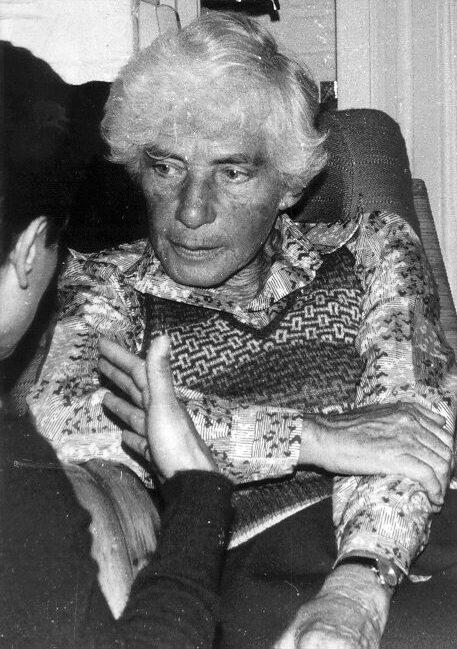
Marie "Mimí" Lisbeth Langer
Birth:
1910
Death:
1987
Training Location(s):
MD, University of Vienna (1935)
Primary Affiliation(s):
Argentine Psychoanalytic Association (1942–1969)
The National Autonomous University of Mexico (1974–1987)
Career Focus:
Psychoanalysis; motherhood; sexuality; political activism and the psy-professions
Biography
Marie "Mimí" Lisbeth Langer was an Austrian psychoanalyst, doctor, and one of the six co-founders of the Argentine Psychoanalytic Association, as well as its president between 1959 and 1961 (Hollander, 1992; Plotkin, 2001). Langer’s story is characterized by her difficulty and determination to reconcile psychoanalysis with political activism. Born to an affluent, traditional Viennese family and brought up during the height of Red Vienna, Langer entered medical school training at the University of Vienna in the 1930s when the progressive political conditions in Austria began deteriorating due to the rise of Austro-fascism and anti-semitism. She joined the Communist Party in Vienna, believing it was the only party equipped to fight Nazism and convinced by socialism’s power in promoting women’s liberation (Hollander, 1992). Given the restrictions in pursuing psychiatric training as a Jewish woman living under Austro-fascism, she redirected her professional interest to psychoanalysis, and was accepted into the Viennese Institute of Psychoanalysis by Anna Freud to train as an analyst (Ford, 2021; Hollander, 1992).
While Langer aimed to integrate her political activism and psychoanalysis, the increasing repression of Austro-fascism made it difficult, and the Vienna Institute adopted a position of political neutrality, prohibiting both analysts and analysands from participating in clandestine political organizations (Hollander, 1992). Nevertheless, Langer continued her work within the Communist Party, which led to a two-day imprisonment, and a reprimand from the Institute (Ford, 2021). She left the institute to join the struggle against fascism, joining the International Medical Brigades in the Spanish Republican Army during the Spanish Civil War (Hollander, 1992; Langer, 1989; Plotkin, 2001). After the defeat in Spain, Langer moved to France, then Czechoslovakia, and ultimately fled Europe in exile, moving to Uruguay in autumn of 1938, and then Buenos Aires, Argentina in 1942 (Ford, 2021; Hollander, 1992; Langer, 1989).
By the 1950s, Langer had a well-established career as a private and training analyst. Sessions were sought after, and she combined work with a growing family (Ford, 2021). While she ‘kept away’ from politics during this time, she regularly wrote about psychological problems that uniquely impacted women, emphasizing the structural causes of that suffering in her work (Ford, 2021; Hollander, 1992; Langer, 1951/1992). During the 1950s and 1960s, Langer became well-known in the Latin American psychoanalytic community for her work on female psychosomatic disorders (Hollander, 1992; Langer, 1951/1992). At a time when more women in Argentina were entering the workforce, she was the first psychoanalyst to critically analyze and address women’s issues in widely read psychoanalytic books. Her work was inspired by Melanie Klein, Helene Deutsch and the anthropological work of Margaret Mead, and it contextualized women’s ‘disorders,’ and emphasized their potential cultural causes (Ford, 2021). Langer critiqued Sigmund Freud’s ‘phallocentric’ perspectives, and argued that Klein's ideas about female psychosexual development were an important correction to Freud's ideas about femininity, capturing more adequately the nature of female identity and psychological conflict (Ford, 2021; Hollander, 1992).
Langer wrote several books, including Motherhood and Sexuality in 1952, which represented a critical stance and a change in mainstream psychoanalytic perspectives on femininity at the time, which equated women’s mental health with an adherence to traditional gender roles and divisions of labor (Langer, 1952/1992). According to Langer, the economic institutions and cultural values of the patriarchy limited women’s full participation in society, leading women to resent their maternal role. As a result, only when society changed to permit women’s full participation in creative and productive activities beyond the domestic sphere would they be able to accept their role without conflict. Langer came up with her theories on maternity based on her observations during her practice, both with affluent women in her private practice and her work in public hospitals and with group therapy, where she realized that the mental health problems experienced by women were caused by their position in society. She emphasized this stance in the foreword of the 1972 edition of Motherhood and Sexuality (Ford, 2021). These psychoanalytic perspectives on female subordination were ahead of their time, anticipating several decades of contemporary feminist psychoanalytic endeavors. By the time the second edition was published, Langer had become Latin America’s leading female psychoanalyst, and her books were widely read by the psychoanalytic community as well as the general public (Hollander, 1992).
While Langer considered the importance of structural factors and their effects on the pathologization of women’s experiences, she still claimed that motherhood was central to womanhood, going as far as saying that those who were not mothers were not ‘proper’ women. This garnered criticism, yet her encounters with contemporary feminists during the 1970s led her to reconsider some of her views. While she never engaged in textual self-criticism and did not fully update her book, Langer did revise some of her earlier beliefs and moved towards a ‘contemporary’ feminist position, influenced by the younger generation (Ford, 2021).
Between the 1950s and the end of the 1980s, many countries in the Latin American region were governed by repressive dictatorships, including Argentina, which entered a period of political turmoil in the 1960s. During this time, Langer began to consider the role of psychoanalysts in promoting conformity to societal norms and becoming instruments of the state (Ford, 2021). Awakened by civil uprisings, known as the Cordobazo, psychoanalysts that had once been apolitical began to take political positions (Plotkin, 2001; Vezzetti, 2011). While Langer had taken an apolitical stance for several decades, by the 1970s she again became committed to fully integrating psychoanalysis and her Marxist ideals, reconnecting with her left-wing political identity after 20 years (Ford, 2021). While the creation of clandestine political groups was on the rise, the APA attempted to keep a distance between psychoanalytic practice and politics, creating a rift with those interested in understanding societal effects on mental health (Ford, 2021). Langer became a leader of the leftist faction that split from the APA, an organization she had co-founded, protesting the organization’s refusal to abandon political neutrality amid government repression in Argentina. She also resigned from the International Psychoanalytical Association (IPA), objecting to their apolitical stance. Langer became one of the members of the Argentine Federation of Psychiatrists (FAP), an organization that was formed to conduct group therapy, work in public healthcare settings, and train a broader range of mental health professionals (Ford, 2021; Plotkin, 2001). This coalition of mental health workers were free to openly study the connection between Marxism and the psy-disciplines (Ford, 2021).
The repressive regime in Argentina resulted in the persecution of many academics and scientists, and put measures in place to suppress the work of socially-oriented psychoanalysts (Ford, 2021). After receiving threats from the repressive right-wing terrorist group Alianza Anticomunista Argentina (The Argentine Anticommunist Alliance), known as Triple A, Langer fled to Mexico in 1974 and spent the next 13 years there, where she became a Faculty member at Universidad Nacional Autónoma de México
(The National Autonomous University of Mexico) during her exile (Hollander, 1992). Mexico became an epicenter of Latin American exiles, many of whom remained politically active, including Langer, who worked with victims of torture and forced migration from all over the Latin American region (Ford, 2021). In 1981, she became involved with the Frente Sandinista de Liberación Nacional (Nicaraguan Sandinista National Liberation Front), helping set up mental health resources and raising funds from Western organizations to support the devastated country after their civil war. She was also the co-founder of the Organization of Mental Health Workers (Langer, 1989).
Langer died of cancer at age 77 in 1987, after returning to Buenos Aires, Argentina. Her contributions exemplify a unique convergence of radical politics, feminism, and psychoanalysis.
By Maria Jose Pernas Rodrigues (2026)
To cite this article, see Credits
Selected Works
Books
Grinberg, L., Langer, M., & Rodrigué, E. (1957) Psicoterapia del Grupo: Su Enfoque Psicoanalítico. Paidós.
Guinsberg, E., Langer, M., & del Palacio, J. (1981) Memoria, Historia, y Diálogo Psicoanalítico. Folios.
Langer, M. (1957). Fantasías Eternas a la Luz del Psicoanálisis. Nova.
Langer, M. (1989). From Vienna to Managua (M. Hooks, Trans.). Free Association Books. (Original work published 1981)
Langer, M. (1992). Motherhood and Sexuality. (N. Hollander, Trans.). The Guilford Press. (Original work published 1951)
Articles
Langer, M. (1944) Algunas aportaciones a la psicología de la menstruación. Revista de Psicoanálisis, 2(2), 211–232.
Langer, M. (1948) Dificultades psicológicas del analista principiante. Revista de Psicoanálisis, 20(4), 333–345.
Langer, M, & Ochandorena, R.P. (1953) El espasmo de trompas como origen de la esterilidad: Sus causas, mecanismo y tratamiento. Revista de Psicoanálisis, 10(1), 103–115.
Langer, M. (1958) Sterility and envy. International Journal of Psychoanalysis, 39, 139–143.
Langer, M. (1976) Psicoanálisis y política: Vicisitudes del movimiento psicoanalítico argentino. Clínica y Análisis Grupal. 1(1), 94-106.
About Mimi Langer
Ford, L. (Director). (2021). Chasing the Revolution
[Film; online video]. Birkbeck, University of London.
Hollander, N. (1992). Introduction. In M. Langer (Ed.), Motherhood and sexuality (pp. 1-21). The Guilford Press.
Hollander, N. C. (1997). Love in a time of hate: Liberation psychology in Latin America. Rutgers University Press.
Plotkin, M. B. (2001). Freud in the Pampas: The emergence and development of a psychoanalytic culture in Argentina. Stanford University Press.
Vezzetti, H. (2011). Psicoanálisis y revolución: vieja y nueva izquierda en las fracturas del psicoanálisis de los sesenta. En: S. Bufano & C. Lotersztain (coord.): Lucha armada en la Argentina (pp. 58-79).
Marie "Mimí" Lisbeth Langer
Birth:
1910
Death:
1987
Training Location(s):
MD, University of Vienna (1935)
Primary Affiliation(s):
Argentine Psychoanalytic Association (1942–1969)
The National Autonomous University of Mexico (1974–1987)
Career Focus:
Psychoanalysis; motherhood; sexuality; political activism and the psy-professions
Biography
Marie "Mimí" Lisbeth Langer was an Austrian psychoanalyst, doctor, and one of the six co-founders of the Argentine Psychoanalytic Association, as well as its president between 1959 and 1961 (Hollander, 1992; Plotkin, 2001). Langer’s story is characterized by her difficulty and determination to reconcile psychoanalysis with political activism. Born to an affluent, traditional Viennese family and brought up during the height of Red Vienna, Langer entered medical school training at the University of Vienna in the 1930s when the progressive political conditions in Austria began deteriorating due to the rise of Austro-fascism and anti-semitism. She joined the Communist Party in Vienna, believing it was the only party equipped to fight Nazism and convinced by socialism’s power in promoting women’s liberation (Hollander, 1992). Given the restrictions in pursuing psychiatric training as a Jewish woman living under Austro-fascism, she redirected her professional interest to psychoanalysis, and was accepted into the Viennese Institute of Psychoanalysis by Anna Freud to train as an analyst (Ford, 2021; Hollander, 1992).
While Langer aimed to integrate her political activism and psychoanalysis, the increasing repression of Austro-fascism made it difficult, and the Vienna Institute adopted a position of political neutrality, prohibiting both analysts and analysands from participating in clandestine political organizations (Hollander, 1992). Nevertheless, Langer continued her work within the Communist Party, which led to a two-day imprisonment, and a reprimand from the Institute (Ford, 2021). She left the institute to join the struggle against fascism, joining the International Medical Brigades in the Spanish Republican Army during the Spanish Civil War (Hollander, 1992; Langer, 1989; Plotkin, 2001). After the defeat in Spain, Langer moved to France, then Czechoslovakia, and ultimately fled Europe in exile, moving to Uruguay in autumn of 1938, and then Buenos Aires, Argentina in 1942 (Ford, 2021; Hollander, 1992; Langer, 1989).
By the 1950s, Langer had a well-established career as a private and training analyst. Sessions were sought after, and she combined work with a growing family (Ford, 2021). While she ‘kept away’ from politics during this time, she regularly wrote about psychological problems that uniquely impacted women, emphasizing the structural causes of that suffering in her work (Ford, 2021; Hollander, 1992; Langer, 1951/1992). During the 1950s and 1960s, Langer became well-known in the Latin American psychoanalytic community for her work on female psychosomatic disorders (Hollander, 1992; Langer, 1951/1992). At a time when more women in Argentina were entering the workforce, she was the first psychoanalyst to critically analyze and address women’s issues in widely read psychoanalytic books. Her work was inspired by Melanie Klein, Helene Deutsch and the anthropological work of Margaret Mead, and it contextualized women’s ‘disorders,’ and emphasized their potential cultural causes (Ford, 2021). Langer critiqued Sigmund Freud’s ‘phallocentric’ perspectives, and argued that Klein's ideas about female psychosexual development were an important correction to Freud's ideas about femininity, capturing more adequately the nature of female identity and psychological conflict (Ford, 2021; Hollander, 1992).
Langer wrote several books, including Motherhood and Sexuality in 1952, which represented a critical stance and a change in mainstream psychoanalytic perspectives on femininity at the time, which equated women’s mental health with an adherence to traditional gender roles and divisions of labor (Langer, 1952/1992). According to Langer, the economic institutions and cultural values of the patriarchy limited women’s full participation in society, leading women to resent their maternal role. As a result, only when society changed to permit women’s full participation in creative and productive activities beyond the domestic sphere would they be able to accept their role without conflict. Langer came up with her theories on maternity based on her observations during her practice, both with affluent women in her private practice and her work in public hospitals and with group therapy, where she realized that the mental health problems experienced by women were caused by their position in society. She emphasized this stance in the foreword of the 1972 edition of Motherhood and Sexuality (Ford, 2021). These psychoanalytic perspectives on female subordination were ahead of their time, anticipating several decades of contemporary feminist psychoanalytic endeavors. By the time the second edition was published, Langer had become Latin America’s leading female psychoanalyst, and her books were widely read by the psychoanalytic community as well as the general public (Hollander, 1992).
While Langer considered the importance of structural factors and their effects on the pathologization of women’s experiences, she still claimed that motherhood was central to womanhood, going as far as saying that those who were not mothers were not ‘proper’ women. This garnered criticism, yet her encounters with contemporary feminists during the 1970s led her to reconsider some of her views. While she never engaged in textual self-criticism and did not fully update her book, Langer did revise some of her earlier beliefs and moved towards a ‘contemporary’ feminist position, influenced by the younger generation (Ford, 2021).
Between the 1950s and the end of the 1980s, many countries in the Latin American region were governed by repressive dictatorships, including Argentina, which entered a period of political turmoil in the 1960s. During this time, Langer began to consider the role of psychoanalysts in promoting conformity to societal norms and becoming instruments of the state (Ford, 2021). Awakened by civil uprisings, known as the Cordobazo, psychoanalysts that had once been apolitical began to take political positions (Plotkin, 2001; Vezzetti, 2011). While Langer had taken an apolitical stance for several decades, by the 1970s she again became committed to fully integrating psychoanalysis and her Marxist ideals, reconnecting with her left-wing political identity after 20 years (Ford, 2021). While the creation of clandestine political groups was on the rise, the APA attempted to keep a distance between psychoanalytic practice and politics, creating a rift with those interested in understanding societal effects on mental health (Ford, 2021). Langer became a leader of the leftist faction that split from the APA, an organization she had co-founded, protesting the organization’s refusal to abandon political neutrality amid government repression in Argentina. She also resigned from the International Psychoanalytical Association (IPA), objecting to their apolitical stance. Langer became one of the members of the Argentine Federation of Psychiatrists (FAP), an organization that was formed to conduct group therapy, work in public healthcare settings, and train a broader range of mental health professionals (Ford, 2021; Plotkin, 2001). This coalition of mental health workers were free to openly study the connection between Marxism and the psy-disciplines (Ford, 2021).
The repressive regime in Argentina resulted in the persecution of many academics and scientists, and put measures in place to suppress the work of socially-oriented psychoanalysts (Ford, 2021). After receiving threats from the repressive right-wing terrorist group Alianza Anticomunista Argentina (The Argentine Anticommunist Alliance), known as Triple A, Langer fled to Mexico in 1974 and spent the next 13 years there, where she became a Faculty member at Universidad Nacional Autónoma de México (The National Autonomous University of Mexico) during her exile (Hollander, 1992). Mexico became an epicenter of Latin American exiles, many of whom remained politically active, including Langer, who worked with victims of torture and forced migration from all over the Latin American region (Ford, 2021). In 1981, she became involved with the Frente Sandinista de Liberación Nacional (Nicaraguan Sandinista National Liberation Front), helping set up mental health resources and raising funds from Western organizations to support the devastated country after their civil war. She was also the co-founder of the Organization of Mental Health Workers (Langer, 1989).
Langer died of cancer at age 77 in 1987, after returning to Buenos Aires, Argentina. Her contributions exemplify a unique convergence of radical politics, feminism, and psychoanalysis.
By Maria Jose Pernas Rodrigues (2026)
To cite this article, see Credits
Selected Works
Books
Grinberg, L., Langer, M., & Rodrigué, E. (1957) Psicoterapia del Grupo: Su Enfoque Psicoanalítico. Paidós.
Guinsberg, E., Langer, M., & del Palacio, J. (1981) Memoria, Historia, y Diálogo Psicoanalítico. Folios.
Langer, M. (1957). Fantasías Eternas a la Luz del Psicoanálisis. Nova.
Langer, M. (1989). From Vienna to Managua (M. Hooks, Trans.). Free Association Books. (Original work published 1981)
Langer, M. (1992). Motherhood and Sexuality. (N. Hollander, Trans.). The Guilford Press. (Original work published 1951)
Articles
Langer, M. (1944) Algunas aportaciones a la psicología de la menstruación. Revista de Psicoanálisis, 2(2), 211–232.
Langer, M. (1948) Dificultades psicológicas del analista principiante. Revista de Psicoanálisis, 20(4), 333–345.
Langer, M, & Ochandorena, R.P. (1953) El espasmo de trompas como origen de la esterilidad: Sus causas, mecanismo y tratamiento. Revista de Psicoanálisis, 10(1), 103–115.
Langer, M. (1958) Sterility and envy. International Journal of Psychoanalysis, 39, 139–143.
Langer, M. (1976) Psicoanálisis y política: Vicisitudes del movimiento psicoanalítico argentino. Clínica y Análisis Grupal. 1(1), 94-106.
About Mimi Langer
Ford, L. (Director). (2021). Chasing the Revolution [Film; online video]. Birkbeck, University of London.
Hollander, N. (1992). Introduction. In M. Langer (Ed.), Motherhood and sexuality (pp. 1-21). The Guilford Press.
Hollander, N. C. (1997). Love in a time of hate: Liberation psychology in Latin America. Rutgers University Press.
Plotkin, M. B. (2001). Freud in the Pampas: The emergence and development of a psychoanalytic culture in Argentina. Stanford University Press.
Vezzetti, H. (2011). Psicoanálisis y revolución: vieja y nueva izquierda en las fracturas del psicoanálisis de los sesenta. En: S. Bufano & C. Lotersztain (coord.): Lucha armada en la Argentina (pp. 58-79).