
Profile
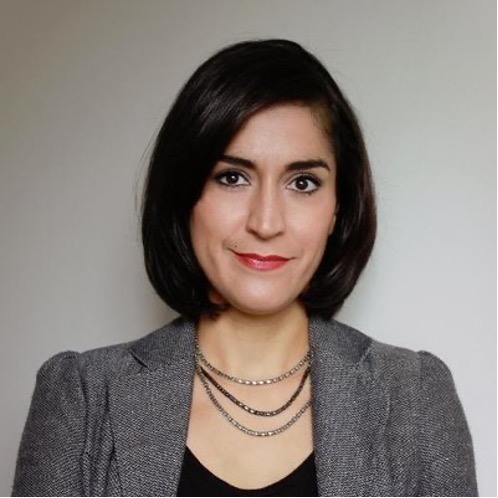
Panteá (Pani) Farvid
Birth:
1981
Training Location(s):
PhD, University of Auckland (2011)
MA, University of Auckland (2005)
Hons. BA, University of Auckland (2003)
BA, University of Auckland (2002)
Primary Affiliation(s):
The New School, New York (2019–Present)
Co-Director, Gender and Sexualities Studies Institute (GSSI), The New School, New York (2023–Present)
Associate Professor of Applied Psychology, Schools of Public Engagement, The New School, New York
Psychology’s Feminist Voices Oral History Interview:
Career Focus:
Psychology of gender; gender-based and sexual violence; LGBTQI+ issues; intersectionality; AI and human intimacies; the politics of sex work; applied ethics; moral psychology; AI and ethics; methodological developments in psychology
Biography
Dr. Panteá (Pani) Farvid is a critical feminist psychologist whose work bridges gender, sexuality, technology, and power. Born in Tehran, Iran in 1981 and raised in Auckland, New Zealand after emigrating at the age of 10, Farvid’s experiences of migration and othering profoundly shaped her critical consciousness: "overnight, you move into a context and you are completely other... it was really jarring." She has reflected that immigration produced an experiential rupture that informed her sustained engagement with gendered, racialized, and minoritized identities. Growing up in what she describes as a “collaborative egalitarian space” further grounded her skepticism towards rigid gender hierarchies.
Farvid completed her undergraduate and graduate psychology training at the University of Auckland. During graduate studies, she worked closely with Virginia Braun and Nicola Gavey, whose mentorship was pivotal in helping her integrate feminist theory, social constructionism, and critical social psychology.
Now an Associate Professor of Applied Psychology at The New School, Farvid also serves as Chair of Psychology in the Bachelor’s Program for Adults and Transfer Students (BPATS). In this leadership role, she advances an applied, socially conscious vision of psychology catered to mature and nontraditional students. She is also the founder and Director of The SexTech Lab, an interdisciplinary research collective examining the intersections of technology, sexuality, and social justice, and Co-Director of The Gender and Sexualities Studies Institute (GSSI), further demonstrating her commitment to advancing interdisciplinary feminist scholarship. Through this work, Farvid examines the micro- and macro-politics of intimate relationships, arguing that everyday relational dynamics are key to understanding gender inequities: “what’s happening in the bedroom tells us a lot about what’s happening within society in terms of power.”
Farvid’s work extends beyond the university. Throughout her career, she has been engaged in feminist activism, public scholarship, and media commentary, viewing research, pedagogy, and community engagement as mutually reinforcing sites of social change. Farvid has been involved with women's and advocacy groups, including the Lower East Side Girls Club, New York State Psychological Association's LGBTQ Committee, and the Women's Refugee Commission.
In 2024, Farvid was recognized for her pedagogical excellence with The New School’s Distinguished Teaching Award. Her teaching philosophy is grounded in a feminist orientation towards collaborative scholarship as opposed to competitive individualism. She describes community as central to both learning and transformation: “I just think that being in community is so important to me, and I really think that individualism, or the focus on individualism and doing things on your own, I just think it's really destructive. We should be in community as much as possible.” Mentorship and research, in her view, are relational practices shaped by common values and sustained dialogue.
Across her career, Farvid situates herself within a broader lineage of feminist psychologists, honouring the intellectual labour of earlier generations. At the same time, Farvid extends that tradition through her work on gender, sexuality, technology, and transnational feminist futures, ensuring that the field remains responsive to how consent, coercion, and inequality are reconfigured across digital and global contexts.
By Amanda Nkeramihigo (2025)
To cite this article, see Credits
Selected Works
Farvid, P., Epstein, S., Lumpkin, L., Canton, T., & King, M. (in press). The racial stratification of the sex industry. In D. Callander, P. Farvid., A. Baradaran & T. Vance (Eds.). Sexual Racism and Social Justice: Reckoning with White Supremacy and Desire. Oxford University Press.
Farvid, P., Nathan, R., Riccardi, J., & Whitmer, A. (in press). Gender, power and agency in online sex work: An expanded framework of (constrained) consent in the context of “camming”, in L. James-Hawkins and R. Ryan-Flood (eds). Consent: Gender, Power and Subjectivity. Routledge.
Farvid, P. & Braun, V. (in press). A critical encyclopaedia of heterosex. In K. Hall & R. Barrett (Eds.), The Oxford handbook of language and sexuality. Oxford University Press.
Farvid, P., & Saing, R. (2022). “If I don’t allow him to have sex with me, our relationship will be broken”: Rape, sexual coercion, and sexual compliance within marriage in rural Cambodia. Violence Against Women, 28(6–7), 1587–1609. https://doi.org/10.1177/107780...
Farvid, P., Nathan, R., Riccardi, J., & Whitmer, A. (2023). Gender, power and agency in online sex work: An expanded framework of (constrained) consent in the context of “camming.” In L. James-Hawkins & R. Ryan-Flood (Eds.), Consent: Gender, power and subjectivity. Routledge.
Farvid, P., & Braun, V. (2018). Gender, identity management, and the discursive positioning of “risk” in men’s and women’s talk about heterosexual casual sex. Archives of Sexual Behavior, 47(5), 1405–1421. https://doi.org/10.1007/s10508...
Farvid, P., & Braun, V. (2014). The “Sassy Woman” and the “Performing Man”: Heterosexual casual sex advice and the (re)constitution of gendered subjectivities. Feminist Media Studies, 14(1), 118–134. https://doi.org/10.1080/146807...
Farvid, P., & Braun, V. (2013). Casual sex as not a natural act and other regimes of truth about heterosexuality. Feminism & Psychology, 23(3), 359–378. https://doi.org/10.1177/095935...
Photo Gallery
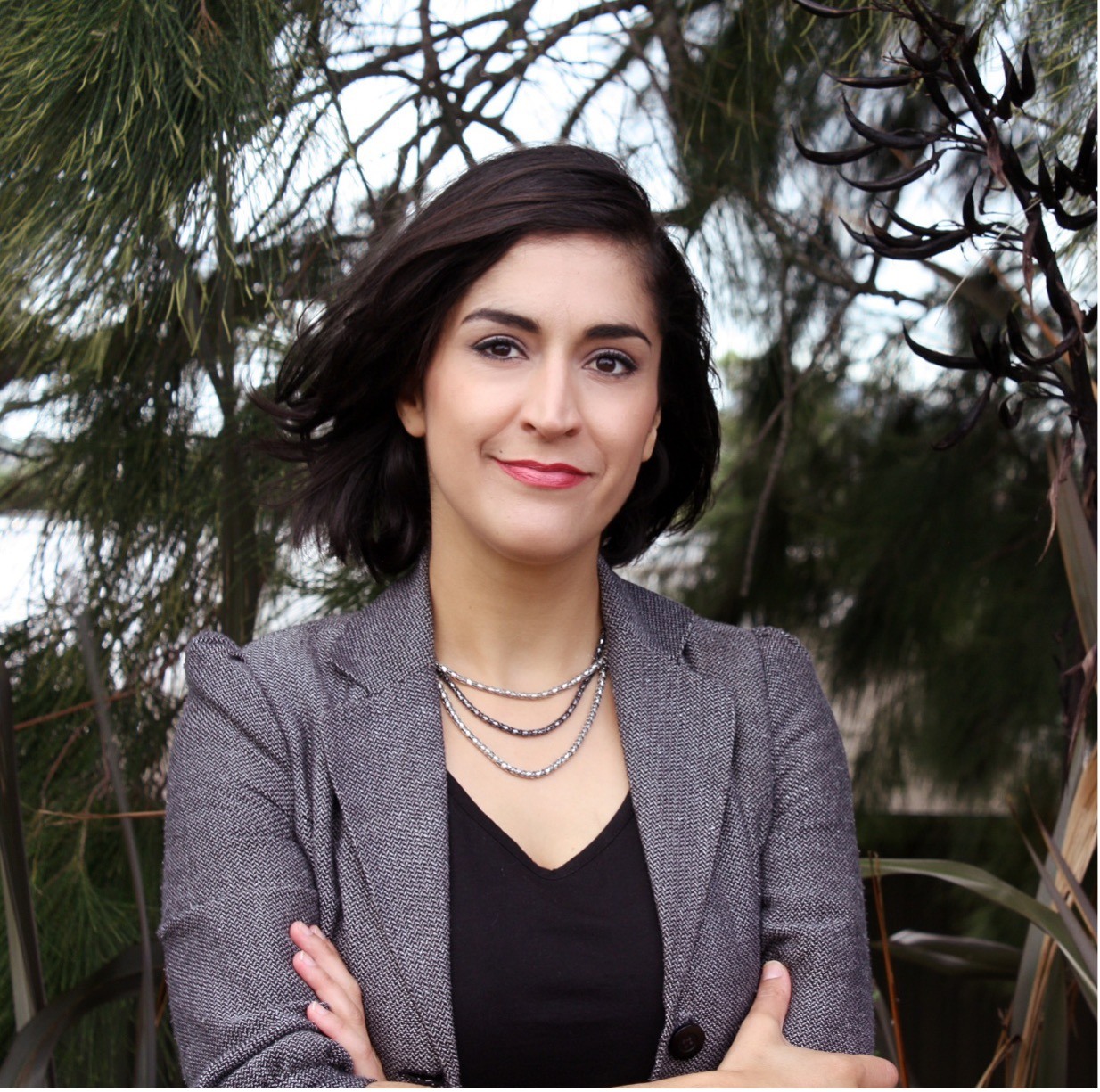
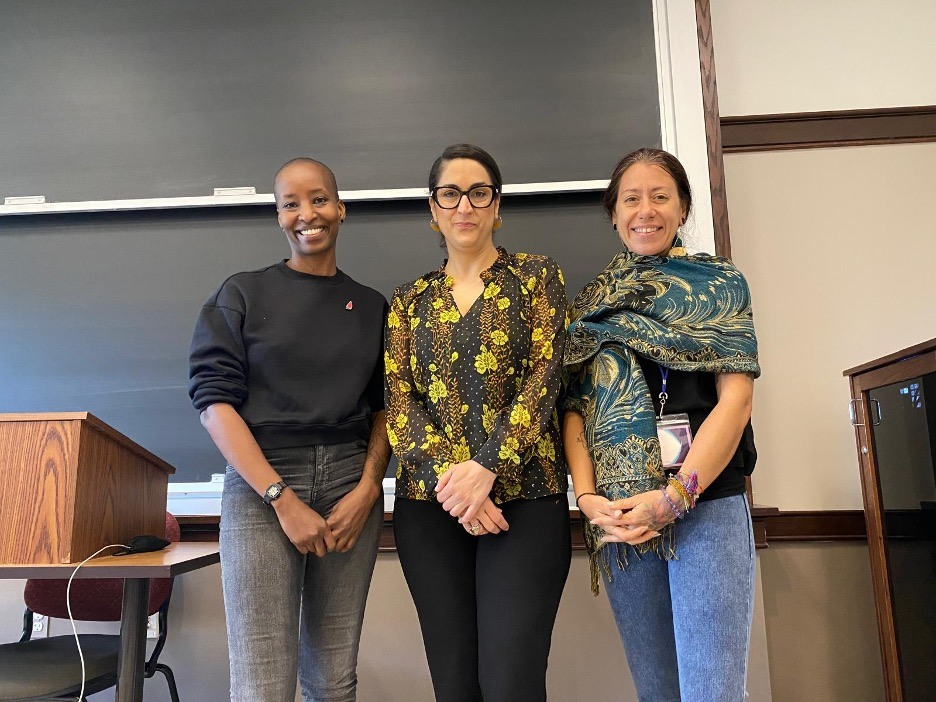
Panteá (Pani) Farvid
Birth:
1981
Training Location(s):
PhD, University of Auckland (2011)
MA, University of Auckland (2005)
Hons. BA, University of Auckland (2003)
BA, University of Auckland (2002)
Primary Affiliation(s):
The New School, New York (2019–Present)
Co-Director, Gender and Sexualities Studies Institute (GSSI), The New School, New York (2023–Present)
Associate Professor of Applied Psychology, Schools of Public Engagement, The New School, New York
Psychology’s Feminist Voices Oral History Interview:
Career Focus:
Psychology of gender; gender-based and sexual violence; LGBTQI+ issues; intersectionality; AI and human intimacies; the politics of sex work; applied ethics; moral psychology; AI and ethics; methodological developments in psychology
Biography
Dr. Panteá (Pani) Farvid is a critical feminist psychologist whose work bridges gender, sexuality, technology, and power. Born in Tehran, Iran in 1981 and raised in Auckland, New Zealand after emigrating at the age of 10, Farvid’s experiences of migration and othering profoundly shaped her critical consciousness: "overnight, you move into a context and you are completely other... it was really jarring." She has reflected that immigration produced an experiential rupture that informed her sustained engagement with gendered, racialized, and minoritized identities. Growing up in what she describes as a “collaborative egalitarian space” further grounded her skepticism towards rigid gender hierarchies.
Farvid completed her undergraduate and graduate psychology training at the University of Auckland. During graduate studies, she worked closely with Virginia Braun and Nicola Gavey, whose mentorship was pivotal in helping her integrate feminist theory, social constructionism, and critical social psychology.
Now an Associate Professor of Applied Psychology at The New School, Farvid also serves as Chair of Psychology in the Bachelor’s Program for Adults and Transfer Students (BPATS). In this leadership role, she advances an applied, socially conscious vision of psychology catered to mature and nontraditional students. She is also the founder and Director of The SexTech Lab, an interdisciplinary research collective examining the intersections of technology, sexuality, and social justice, and Co-Director of The Gender and Sexualities Studies Institute (GSSI), further demonstrating her commitment to advancing interdisciplinary feminist scholarship. Through this work, Farvid examines the micro- and macro-politics of intimate relationships, arguing that everyday relational dynamics are key to understanding gender inequities: “what’s happening in the bedroom tells us a lot about what’s happening within society in terms of power.”
Farvid’s work extends beyond the university. Throughout her career, she has been engaged in feminist activism, public scholarship, and media commentary, viewing research, pedagogy, and community engagement as mutually reinforcing sites of social change. Farvid has been involved with women's and advocacy groups, including the Lower East Side Girls Club, New York State Psychological Association's LGBTQ Committee, and the Women's Refugee Commission.
In 2024, Farvid was recognized for her pedagogical excellence with The New School’s Distinguished Teaching Award. Her teaching philosophy is grounded in a feminist orientation towards collaborative scholarship as opposed to competitive individualism. She describes community as central to both learning and transformation: “I just think that being in community is so important to me, and I really think that individualism, or the focus on individualism and doing things on your own, I just think it's really destructive. We should be in community as much as possible.” Mentorship and research, in her view, are relational practices shaped by common values and sustained dialogue.
Across her career, Farvid situates herself within a broader lineage of feminist psychologists, honouring the intellectual labour of earlier generations. At the same time, Farvid extends that tradition through her work on gender, sexuality, technology, and transnational feminist futures, ensuring that the field remains responsive to how consent, coercion, and inequality are reconfigured across digital and global contexts.
By Amanda Nkeramihigo (2025)
To cite this article, see Credits
Selected Works
Farvid, P., Epstein, S., Lumpkin, L., Canton, T., & King, M. (in press). The racial stratification of the sex industry. In D. Callander, P. Farvid., A. Baradaran & T. Vance (Eds.). Sexual Racism and Social Justice: Reckoning with White Supremacy and Desire. Oxford University Press.
Farvid, P., Nathan, R., Riccardi, J., & Whitmer, A. (in press). Gender, power and agency in online sex work: An expanded framework of (constrained) consent in the context of “camming”, in L. James-Hawkins and R. Ryan-Flood (eds). Consent: Gender, Power and Subjectivity. Routledge.
Farvid, P. & Braun, V. (in press). A critical encyclopaedia of heterosex. In K. Hall & R. Barrett (Eds.), The Oxford handbook of language and sexuality. Oxford University Press.
Farvid, P., & Saing, R. (2022). “If I don’t allow him to have sex with me, our relationship will be broken”: Rape, sexual coercion, and sexual compliance within marriage in rural Cambodia. Violence Against Women, 28(6–7), 1587–1609. https://doi.org/10.1177/107780...
Farvid, P., Nathan, R., Riccardi, J., & Whitmer, A. (2023). Gender, power and agency in online sex work: An expanded framework of (constrained) consent in the context of “camming.” In L. James-Hawkins & R. Ryan-Flood (Eds.), Consent: Gender, power and subjectivity. Routledge.
Farvid, P., & Braun, V. (2018). Gender, identity management, and the discursive positioning of “risk” in men’s and women’s talk about heterosexual casual sex. Archives of Sexual Behavior, 47(5), 1405–1421. https://doi.org/10.1007/s10508...
Farvid, P., & Braun, V. (2014). The “Sassy Woman” and the “Performing Man”: Heterosexual casual sex advice and the (re)constitution of gendered subjectivities. Feminist Media Studies, 14(1), 118–134. https://doi.org/10.1080/146807...
Farvid, P., & Braun, V. (2013). Casual sex as not a natural act and other regimes of truth about heterosexuality. Feminism & Psychology, 23(3), 359–378. https://doi.org/10.1177/095935...