
Floretta Boonzaier
Geopolitical and historical context
South Africa’s landscape is profoundly shaped by its long and painful history of colonialism and apartheid. Dutch colonization, which began in the 17th century, was followed by British rule, both of which dispossessed indigenous peoples and entrenched both racial and gender hierarchies through violence, land theft, and forced labor. These colonial systems systematically stripped Black South Africans of land and rights, embedding deep economic and social inequalities that persist today.
The Apartheid era (1948–1994) formalized racial segregation and discrimination, classifying people as White, Black, Coloured, or Indian under the Population Registration Act of 1950. This rigid system dictated every aspect of life, including education, employment, residence, privileging White South Africans and subjecting Black and Coloured communities to severe restrictions, dispossession, and state violence. Black and Coloured women, in particular, faced intersecting oppressions of race and gender, with psychological impacts including trauma, internalized oppression, and struggles over identity.
Despite the end of Apartheid, South Africa continues to grapple with the legacies of structural racism, economic inequality, and gender-based violence. Black South Africans remain disproportionately affected by poverty and unemployment, while Coloured communities experience ongoing marginalization and ambiguous social positioning.
Insights from Interview
Floretta Boonzaier is a psychologist and professor at the University of Cape Town, where she has spent over two decades and co-founded the Hub for Decolonial Feminist Psychologies in Africa with Shose Kessi. When asked to define decolonial feminist psychology, she laughs: "I want to do a tongue-in-cheek thing and say, well, it defies definition." What she offers instead is an account of how it emerged, as something the work itself demanded.
Boonzaier’s feminism predates her academic career. She traces it to the women in her community in Cape Town during apartheid, women who held families together, cared for each other's children, and resisted state violence.
For her, feminism was intersectional before she had the academic term for it. Her own experience of racialized and class-based exclusion left "no other way to think about feminism." That same rootedness in lived experience shaped her path into decolonial thought. Her decolonial feminist commitments did not begin with theory but emerged from years of researching gendered and sexual violence in South Africa, where she kept encountering the resurfacing of colonial ideas about Black women in media discourse, scholarly writing, and public consciousness, noting the "hyper visibility of their body, and a lack of subjectivity, a lack of humanity, a lack of dignity."
The rise of decolonial and feminist movements, such as #RhodesMustFall and #FeesMustFall, has challenged institutional racism and colonial legacies, foregrounding intersectionality and the need to center marginalized voices in knowledge production and social justice.
Boonzaier’s life and work are inseparable from this context.
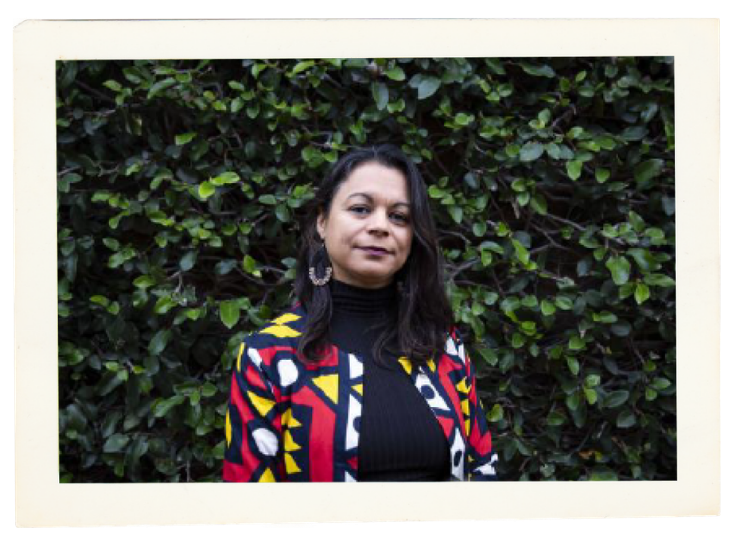
Floretta Boonzaier: "I learned feminism, the practice of feminism, intersectional feminism, long before I learned academic feminism, and that was really, on the basis of the experience of growing up in a Black community in Cape Town during apartheid... I learned my feminism from my mom, you know, like strong, strong women like my mom, who kind of held it all together in the face of state and other forms of violence that they were witnessing in their communities."
"For me, it's always been intersectional because of my own experiences of racialized and class-based exclusion. And so, there was no other way to think about feminism."
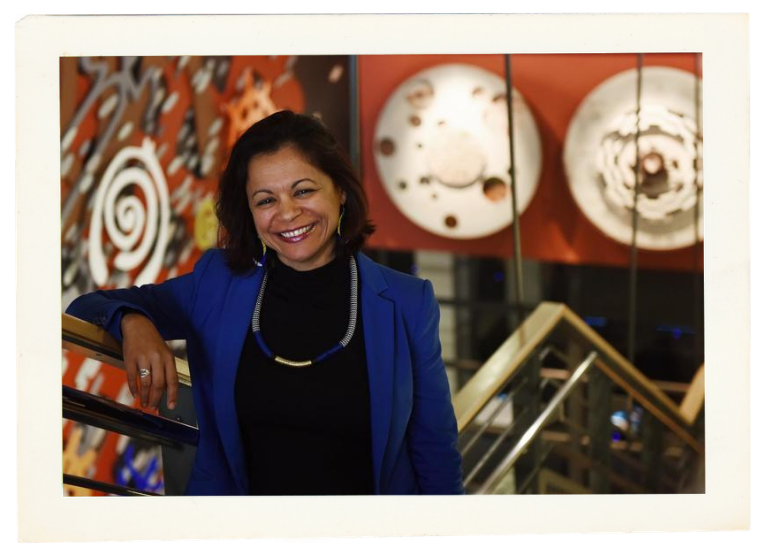
Boonzaier names two things as central to decolonial feminist psychology: intersectionality and history.
Specifically, the recognition that colonization, slavery, and apartheid have been foundational to the creation of particular kinds of identification around race, gender, and sexuality. But it is not only about acknowledging that history; it is about asking how it resurfaces in the present. It was precisely this kind of interrogation, within her own research around gendered-racial violence, that brought her to decolonial feminism. As she further describes her understanding of decolonial feminist psychology, she notes that it is not as a fixed framework but an emerging, evolving praxis, one that allows researchers to hold the complexity of subjectivity, to account for their own humanity alongside that of participants, and to produce knowledge that counters traditional forms of knowledge production. Boonzaier further argues that African feminisms “[have] always been decolonial” even when they haven't used that name, offering a geopolitical challenge to assumptions about where decolonial thought originates.
Boonzaier is clear-eyed about the risks of the current moment: when decolonial feminism becomes fashionable enough for historically white institutions to fund it, the critical edge can dull. The next challenge, she argues, is not only to critique psychology but to turn that critique inward.
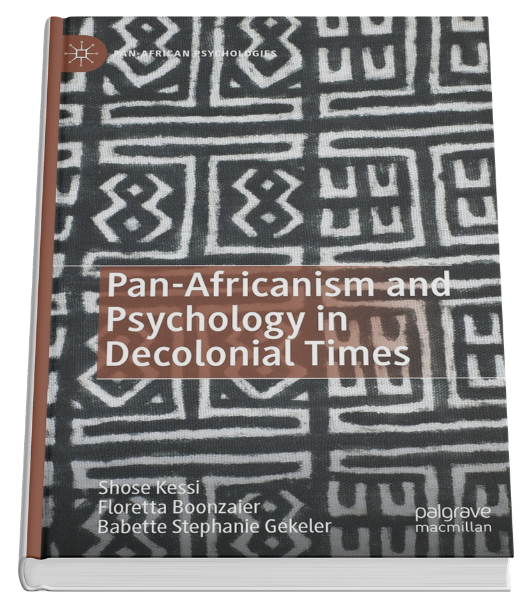
The Hub for Decolonial Feminist Psychologies in Africa, co-founded by Boonzaier and Kessi, is the material expression of these commitments: she describes it as "a place I would have wanted when I joined the Psychology department as a student, as a black student who felt so alienated and so out of place." Now, 20 years into her career, her work has turned toward joy, pleasure, healing, and what she calls "decolonial love", calling some of the work she does as "heart work." Boonzaier offers this exhibit an understanding of decolonial feminist psychology as something that cannot be separated from the ground it grows in — shaped by the specificities of place and history, and capacious enough to move from the interrogation of violence toward the practice of care.
Floretta Boonzaier: "My decolonial feminism wasn't something that I felt like, 'Oh, there's this nice theory let me use it to try and understand my work on gender violence.' And I still think about decolonial feminism in this way: I think about it as an emerging kind of, evolving praxis."
On the next challenge: turning the critique inward
Boonzaier: "I think that the challenge for us is now to begin to see the ways in which a particular kind of feminism has become mainstream within psychology itself. And for us to interrogate and disrupt that if it needs disruption."
"We've been very good at critiquing psychology. Oh, that's our favorite thing to do... But I think it's the self-interrogation, the self-reflective work that we now need to do."
On what a "full-circle career" looks like
"My work has shifted to now begin to talk about joy, pleasure, healing, decolonial love."
"I talk about some of the work that I do as heart work, to be able to do the heart work in a discipline, you know, just is really, very meaningful."
"Find the work that moves you and try to understand why it moves you."
Credits
All images courtesy of interviewees.