
Shose Kessi
Geopolitical and historical context
Shose Kessi’s work emerges from and directly challenges the intersecting legacies of European imperialism, coloniality, and racialized knowledge production. The South African university system, where she has made her most sustained intervention, remains structurally shaped by apartheid’s racial hierarchy and by colonial models of academic authority.
Within these institutions, formal inclusion has often masked enduring exclusions of Black students, Black women faculty, African epistemologies, and feminist thought. While the post-apartheid context in South Africa has brought with it a commitment to democratic transformation, Kessi entered the academy during a moment of disillusionment with what “transformation” had failed to deliver. Student movements such as #RhodesMustFall erupted in response to precisely these failures, demanding not only symbolic but epistemological change. These struggles exposed the deep entrenchment of white institutional cultures and colonial epistemologies, even in contexts where Black leadership had nominally been achieved. Kessi’s scholarship and praxis both emerge from and intervene in this climate of tension, contradiction, and possibility.
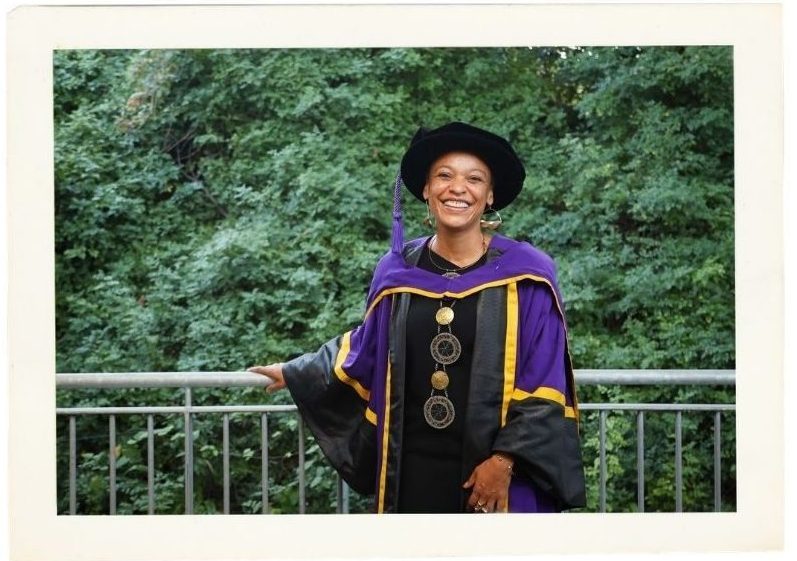
Decoloniality, as Kessi articulates it, must grapple not only with the historical violence of colonization but with the ongoing structures—often subtle and institutionalized—through which racial, gendered, and epistemic power are maintained. Her work thus takes aim at both colonial residues and postcolonial reproductions, arguing for a radical reconfiguration of how psychology is theorized, taught, and practiced on the African continent.
Insights from the Interview
In her interview, Shose Kessi offers a textured, self-reflexive account of what it means to become a feminist in spaces where both feminism and race consciousness are often treated as secondary or peripheral. Rather than claiming a fixed feminist identity, she traces a process of becoming shaped by her work in women’s development, the embodied realities of racialized exclusion, and the catalytic role of student-led decolonial movements.
The feminist commitments she describes are inseparable from her lived experiences of institutional marginality.
Kessi's understanding of decolonial feminist psychology is neither disciplinary nor dogmatic, but defined by a refusal to parse questions of identity, knowledge, and institutional structure. She recounts how inequitable institutional practices affected her personally—such as being denied housing accommodations upon arrival at UCT, while a white male colleague received housing without issue.
These moments of structural violence are not presented as anecdotes but as analytics: evidence of how supposedly transformed institutions continue to produce inequality along race, gender, and national lines.
These experiences spurred her formation of the Black Academic Caucus and the Hub for Decolonial Feminist Psychologies in Africa (in collaboration with Floretta Boonzaier), both of which demonstrate her sustained drive towards institutional transformation—not through heroic leadership, but through network-building, political mentorship, and what she calls “leading from behind.”
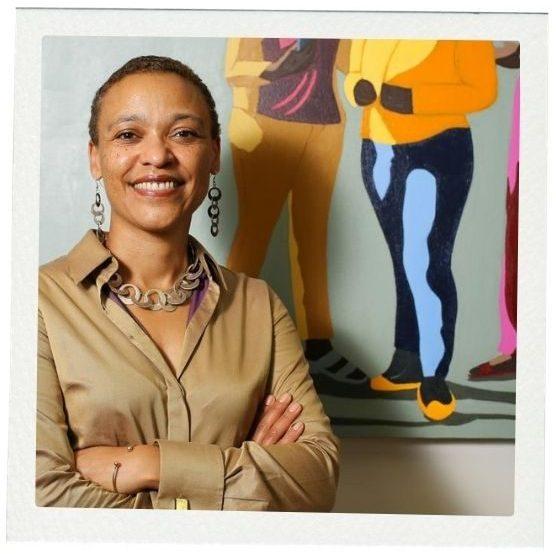

Shose Kessi: “As a feminist, I’ve tried to lead from behind and adopt multiple types of strategies. It's not about being loud, because being loud is exhausting, and you don't last very long. But I have to say that, yes, I have experienced quite a few difficult dynamics in my position. In fact, when I was appointed as Dean, I was—and this is a specific, very interesting South African context issue—because I'm not South African. So, there's a lot of xenophobia here.”
Shose Kessi: “My role as a decolonial feminist psychologist is to keep figuring out how coloniality reproduces itself and critique it…. I feel like what I can contribute as a scholar is that critique, and to keep trying to figure out how colonial relations of power keep repeating themselves and drawing on Pan-African concepts and feminist concepts to highlight how that happens.”
Shose Kessi: “Psychology is very much implicated in how we legitimize colonization, slavery, et cetera... People call that epistemic violence of research. I think there's a lot of research that we do… positivist research based on psychometrics and those kinds of approaches. It’s very harmful to people. But at the same time, I think psychology is very necessary. My approach is to kind of figure out, well, how can we use psychology in a way that can actually be productive, be joyful, be rejuvenating, be healing?”
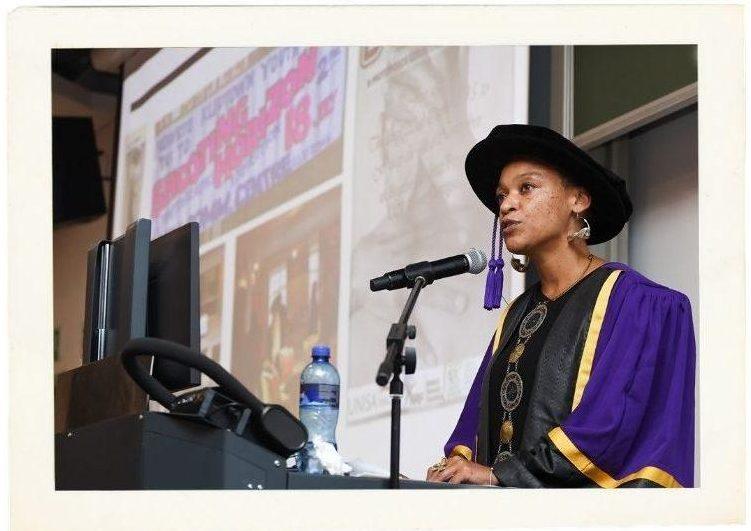
Credits
All images courtesy of interviewees.