
Profile
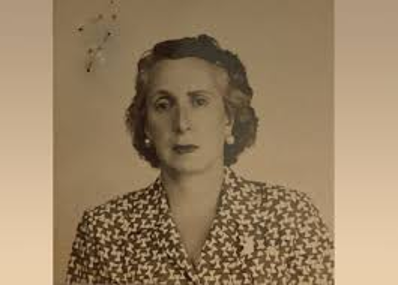
Mercedes Rodrigo Bellido
Birth:
1891
Death:
1982
Training Location(s):
BA, University of Geneva (Rousseau Institute) (1923)
BA, Central Normal School of Madrid (1910)
Primary Affiliation(s):
School for the Deaf-Mute and Blind, Madrid (1919–1920)
Professional Orientation section of the Institute for the Rehabilitation of Disabled Workers (1923–1925)
Institute of Medical and Educational Sciences in Carabanchel, Madrid (Instituto Médico Pedagógico) (1925–1929)
Supreme Council for the Protection of Children (1931–1939)
Behavioral Clinic of the Juvenile Court of the Supreme Council for the Protection of Children (1933–1939)
Home for Juvenile Offenders of Madrid (1934–1939)
Child Relief Committee (1936–1939)
National Institute of Applied Psychology and Psychotechnics, Spain (1929–1939), Director (1936–1939)
Psychotechnics section of the National University of Colombia (1939–1950)
Institute for Applied Psychology, Colombia (1948–1950)
U.S. Veterans Administration, Puerto Rico (1955–1972)
Career Focus:
Experimental psychology; child psychology; psychotechnics; career guidance; pedagogy
Biography
Mercedes Rodrigo Bellido, born in Madrid in 1891, was initially trained in education at the Central Teacher Training College in Madrid, which was common among women at the time. She soon developed an interest in special education for children with disabilities, which led her to start working at the School for the Deaf and Blind in 1919. This work drew her closer to the field of psychology, and in 1920, she received a scholarship to study psychopedagogy at the Rousseau Institute in Geneva, from which she obtained a diploma in psychology from the University of Geneva in 1923 (Herrero, 1997).
During her stay, she trained in experimental psychology and psychometrics with Swiss neurologist Edouard Claparède, whose intelligence test she translated and administered to children from Madrid in 1923 with her colleague Pere Roselló, and who was a colleague of Jean Piaget. She also met Sabina Spielrein, from whom she learned about child psychoanalysis, and Alice Descoudres, whose test on child intelligence she also translated together with Pere Roselló. She also met the founders of the Institute’s training school, Maison des Petits, Louise Lafendel and Mina Audemars, with whom she completed her training in special education (Monteagudo & García-Colmenares, 2025).
Upon her return to Spain, she was trained in different areas of psychology, including educational, industrial, and social psychology, and she played a pioneering role in career guidance. In Spain, institutes of psychology with an important applied perspective began to operate, and in 1923, she was appointed head of the Career Guidance section at the Institute for the Rehabilitation of Disabled Workers (Monteagudo & Chisvert, 2007). In 1925, she became the educational director of the Institute of Medical Sciences. Thanks to her work related to education and childhood, in 1931, she was appointed representative to the National Board for the Disabled, specializing in children with difficulties, and to the Supreme Council for the Protection of Children. Due to her interest in troubled children, between 1931 and 1939 she worked as a psychologist at the Behavior Clinic of the Juvenile Court and, between 1936 and 1937, at the Home for Juvenile Delinquents in Madrid, where she became a probation officer alongside Regina Lago (1897–1966), providing psychological guidance to help children avoid reoffending (García-Colmenares, 2011).
In 1930, Mercedes Rodrigo organized the laboratories and career guidance and selection services of the National Institute of Psychotechnics together with José Germain. Her responsibilities included visiting laboratories in different European cities, attending conferences in the field such as the VII Congress of Psychotechnics in Moscow, teaching psychotechnics courses for future psychologists, and adapting the main assessment and diagnostic tests of the time, such as the Stanford-Binet intelligence test, to the Spanish population. In the field of industrial psychology, her work on accident prevention and career choice was particularly noteworthy, and she was a pioneer in the development of personnel selection tests, notably the first driver selection tests. She was director of the Institute between 1936 and 1939 (Monteagudo et al., 2004).
During the Spanish Civil War (1936–1939), she was a representative of the Children's Relief Committee, created by the Republican government, where she continued to work mainly to facilitate the evacuation of children from Madrid.
Shortly before the war ended in 1939 and Franco's dictatorship began (1939–1975), Mercedes went into exile, like many other Spanish thinkers and scientists. She first traveled to Switzerland, where she stayed briefly, and finally settled in Colombia in 1939, thanks to an invitation to organize psychotechnical services for the selection of new students at the National University of Colombia.
During the decade she spent in Colombia, she was responsible for creating the first professional training center in psychology, the Institute of Applied Psychology, in 1947, which established an independent professional identity for psychology. Her next task would be to initiate Colombia’s first Psychology research studies with other Colombian collaborators, such as Esguerra Gómez and López de Mesa. Despite her work and commitment to Colombia, the political climate of Colombia at the time left her with no choice but to leave the country when she was accused of helping to manipulate the psychometric tests for university admission to give communists an advantage. She then went into exile for the second time in Puerto Rico in 1950, where she spent her last decades until she died in 1982. There, she began to develop various careers, as a professor of education at the University of Puerto Rico, as a psychologist at a private clinic and in her own private practice, and as a consulting psychologist for the United States Veterans Administration. She also participated in the founding of the Puerto Rico Psychology Association in 1954, serving as its president in 1958. She continued working until her late retirement in 1972 (Umaña & de la Riva, 2022).
Mercedes' work was recognized in her time in Spain by her male colleagues, and she was published in the leading journals of the field, but her exile and her status as a woman led to her subsequent oblivion. From the outset, she was fully committed to her professional career, well aware from her research on career guidance of the difficulty for a woman to balance family and professional life. However, in Colombia and Puerto Rico, she was not initially recognized as a leading figure in the institutionalization of psychology in those countries, with priority given to the work of her male colleagues. It was only after subsequent historiographical reviews in the 1970s that she was repositioned as a leading figure in psychology in Colombia (Ardila, 1973; 1978). The historiographical review of her contributions to psychology in Spain (Herrero, 1997, 2003) has also led to her recognition as the first Spanish psychologist and pioneer of psychotechnics and career guidance.
By María José Monteagudo Soto (Valencia University, Spain) & Laura Carmona Navajo (Universidad Autónoma de Madrid, UAM) (2025)
To cite this article, see Credits
Selected Works
Germain, J., & Rodrigo, M. (1930). Pruebas de Inteligencia. Madrid, La Lectura.
Rodrigo, M., & Roselló, P. (1923). Revisión española de los test de Claparède. Revista de pedagogía, 2(15), 81–92
Rodrigo, M. (1927). La orientación Profesional femenina. Recopilación de los Trabajos del IV Congreso de Estudios Vascos.
Rodrigo, M. (1934). Los niños ‘malos’ y la higiene mental. Revista de Pedagogía 151, 310–318.
Rodrigo, M. (1935). Prevención de accidentes desde la infancia. Revista de Organización Científica, 4(29).
Rodrigo, M. (1942). Informe de la Sección de Psicotecnia. Minerva.
Rodrigo, M. (1946). ¿Qué puede hacer la psicotecnia por el estudiante? Revista de la Universidad Nacional, 6, 309–320. https://revistas.unal.edu.co/index.php/revistaun/article/view/13533
Rodrigo, M. (1949): Introducción al estudio de la Psicología. Universidad Nacional de Colombia.
About
Ardila, R. (1978). La psicología profesional en Colombia. En Rubén Ardila (Ed.), La profesión del psicólogo (pp. 82-88). Trillas.
García-Colmenares, C. (2011). Las primeras psicólogas españolas Trayectorias vitales y profesionales. Servicio Publicaciones Universidad de Granada.
Guil Bozal, A., & Vera Gil, S. (2011). Entre Europa y América Latina: Mercedes Rodrigo, psicopedagoga pionera. Revista historia de la educación latinoamericana, 13(17), 71–92.
Herrero, F. (1997). La escuela de Ginebra en la psicología aplicada española: la figura de Mercedes Rodrigo. Revista de Historia de la Psicología, 18 (1), 139-150. https://journals.copmadrid.org/historia/art/3f088ebeda03513be71d34d214291986.
Herrero, F. (2003). Mercedes Rodrigo (1891–1982): La primera psicóloga española. Revista de psicologia general y aplicada, 56(2), 139-148.
Jaraba, B. (2014). Un escritorio para Mercedes: revisando el mito fundacional de la psicología en Colombia. Universidad Nacional de Colombia. Tesis Doctoral.
Monteagudo, M. J., Tortosa, F., & Chisvert, M. (2004). La psicología aplicada en España a través del trabajo desarrollado por los Institutos de orientación Profesional y el Instituto Nacional de Psicotecnia durante la época de los años 30. Revista de Historia de la psicología, 25 (1), 19–30. https://journals.copmadrid.org...
Monteagudo, M. J., & García Colmenares, C. (2025). Psicólogas pioneras: Historias de ciencia feminismo y compromiso social. Publicacions de la Universitat de València.
Umaña, O., y de la Riva, G. (2022). Mercedes Rodrigo: una vida para la psicología. Colegio Oficial de Psicología de Cantabria.
Photo Gallery
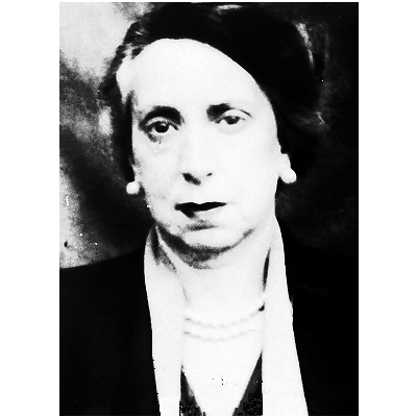
Mercedes Rodrigo Bellido
Birth:
1891
Death:
1982
Training Location(s):
BA, University of Geneva (Rousseau Institute) (1923)
BA, Central Normal School of Madrid (1910)
Primary Affiliation(s):
School for the Deaf-Mute and Blind, Madrid (1919–1920)
Professional Orientation section of the Institute for the Rehabilitation of Disabled Workers (1923–1925)
Institute of Medical and Educational Sciences in Carabanchel, Madrid (Instituto Médico Pedagógico) (1925–1929)
Supreme Council for the Protection of Children (1931–1939)
Behavioral Clinic of the Juvenile Court of the Supreme Council for the Protection of Children (1933–1939)
Home for Juvenile Offenders of Madrid (1934–1939)
Child Relief Committee (1936–1939)
National Institute of Applied Psychology and Psychotechnics, Spain (1929–1939), Director (1936–1939)
Psychotechnics section of the National University of Colombia (1939–1950)
Institute for Applied Psychology, Colombia (1948–1950)
U.S. Veterans Administration, Puerto Rico (1955–1972)
Career Focus:
Experimental psychology; child psychology; psychotechnics; career guidance; pedagogy
Biography
Mercedes Rodrigo Bellido, born in Madrid in 1891, was initially trained in education at the Central Teacher Training College in Madrid, which was common among women at the time. She soon developed an interest in special education for children with disabilities, which led her to start working at the School for the Deaf and Blind in 1919. This work drew her closer to the field of psychology, and in 1920, she received a scholarship to study psychopedagogy at the Rousseau Institute in Geneva, from which she obtained a diploma in psychology from the University of Geneva in 1923 (Herrero, 1997).
During her stay, she trained in experimental psychology and psychometrics with Swiss neurologist Edouard Claparède, whose intelligence test she translated and administered to children from Madrid in 1923 with her colleague Pere Roselló, and who was a colleague of Jean Piaget. She also met Sabina Spielrein, from whom she learned about child psychoanalysis, and Alice Descoudres, whose test on child intelligence she also translated together with Pere Roselló. She also met the founders of the Institute’s training school, Maison des Petits, Louise Lafendel and Mina Audemars, with whom she completed her training in special education (Monteagudo & García-Colmenares, 2025).
Upon her return to Spain, she was trained in different areas of psychology, including educational, industrial, and social psychology, and she played a pioneering role in career guidance. In Spain, institutes of psychology with an important applied perspective began to operate, and in 1923, she was appointed head of the Career Guidance section at the Institute for the Rehabilitation of Disabled Workers (Monteagudo & Chisvert, 2007). In 1925, she became the educational director of the Institute of Medical Sciences. Thanks to her work related to education and childhood, in 1931, she was appointed representative to the National Board for the Disabled, specializing in children with difficulties, and to the Supreme Council for the Protection of Children. Due to her interest in troubled children, between 1931 and 1939 she worked as a psychologist at the Behavior Clinic of the Juvenile Court and, between 1936 and 1937, at the Home for Juvenile Delinquents in Madrid, where she became a probation officer alongside Regina Lago (1897–1966), providing psychological guidance to help children avoid reoffending (García-Colmenares, 2011).
In 1930, Mercedes Rodrigo organized the laboratories and career guidance and selection services of the National Institute of Psychotechnics together with José Germain. Her responsibilities included visiting laboratories in different European cities, attending conferences in the field such as the VII Congress of Psychotechnics in Moscow, teaching psychotechnics courses for future psychologists, and adapting the main assessment and diagnostic tests of the time, such as the Stanford-Binet intelligence test, to the Spanish population. In the field of industrial psychology, her work on accident prevention and career choice was particularly noteworthy, and she was a pioneer in the development of personnel selection tests, notably the first driver selection tests. She was director of the Institute between 1936 and 1939 (Monteagudo et al., 2004).
During the Spanish Civil War (1936–1939), she was a representative of the Children's Relief Committee, created by the Republican government, where she continued to work mainly to facilitate the evacuation of children from Madrid.
Shortly before the war ended in 1939 and Franco's dictatorship began (1939–1975), Mercedes went into exile, like many other Spanish thinkers and scientists. She first traveled to Switzerland, where she stayed briefly, and finally settled in Colombia in 1939, thanks to an invitation to organize psychotechnical services for the selection of new students at the National University of Colombia.
During the decade she spent in Colombia, she was responsible for creating the first professional training center in psychology, the Institute of Applied Psychology, in 1947, which established an independent professional identity for psychology. Her next task would be to initiate Colombia’s first Psychology research studies with other Colombian collaborators, such as Esguerra Gómez and López de Mesa. Despite her work and commitment to Colombia, the political climate of Colombia at the time left her with no choice but to leave the country when she was accused of helping to manipulate the psychometric tests for university admission to give communists an advantage. She then went into exile for the second time in Puerto Rico in 1950, where she spent her last decades until she died in 1982. There, she began to develop various careers, as a professor of education at the University of Puerto Rico, as a psychologist at a private clinic and in her own private practice, and as a consulting psychologist for the United States Veterans Administration. She also participated in the founding of the Puerto Rico Psychology Association in 1954, serving as its president in 1958. She continued working until her late retirement in 1972 (Umaña & de la Riva, 2022).
Mercedes' work was recognized in her time in Spain by her male colleagues, and she was published in the leading journals of the field, but her exile and her status as a woman led to her subsequent oblivion. From the outset, she was fully committed to her professional career, well aware from her research on career guidance of the difficulty for a woman to balance family and professional life. However, in Colombia and Puerto Rico, she was not initially recognized as a leading figure in the institutionalization of psychology in those countries, with priority given to the work of her male colleagues. It was only after subsequent historiographical reviews in the 1970s that she was repositioned as a leading figure in psychology in Colombia (Ardila, 1973; 1978). The historiographical review of her contributions to psychology in Spain (Herrero, 1997, 2003) has also led to her recognition as the first Spanish psychologist and pioneer of psychotechnics and career guidance.
By María José Monteagudo Soto (Valencia University, Spain) & Laura Carmona Navajo (Universidad Autónoma de Madrid, UAM) (2025)
To cite this article, see Credits
Selected Works
Germain, J., & Rodrigo, M. (1930). Pruebas de Inteligencia. Madrid, La Lectura.
Rodrigo, M., & Roselló, P. (1923). Revisión española de los test de Claparède. Revista de pedagogía, 2(15), 81–92
Rodrigo, M. (1927). La orientación Profesional femenina. Recopilación de los Trabajos del IV Congreso de Estudios Vascos.
Rodrigo, M. (1934). Los niños ‘malos’ y la higiene mental. Revista de Pedagogía 151, 310–318.
Rodrigo, M. (1935). Prevención de accidentes desde la infancia. Revista de Organización Científica, 4(29).
Rodrigo, M. (1942). Informe de la Sección de Psicotecnia. Minerva.
Rodrigo, M. (1946). ¿Qué puede hacer la psicotecnia por el estudiante? Revista de la Universidad Nacional, 6, 309–320. https://revistas.unal.edu.co/index.php/revistaun/article/view/13533
Rodrigo, M. (1949): Introducción al estudio de la Psicología. Universidad Nacional de Colombia.
About
Ardila, R. (1978). La psicología profesional en Colombia. En Rubén Ardila (Ed.), La profesión del psicólogo (pp. 82-88). Trillas.
García-Colmenares, C. (2011). Las primeras psicólogas españolas Trayectorias vitales y profesionales. Servicio Publicaciones Universidad de Granada.
Guil Bozal, A., & Vera Gil, S. (2011). Entre Europa y América Latina: Mercedes Rodrigo, psicopedagoga pionera. Revista historia de la educación latinoamericana, 13(17), 71–92.
Herrero, F. (1997). La escuela de Ginebra en la psicología aplicada española: la figura de Mercedes Rodrigo. Revista de Historia de la Psicología, 18 (1), 139-150. https://journals.copmadrid.org/historia/art/3f088ebeda03513be71d34d214291986.
Herrero, F. (2003). Mercedes Rodrigo (1891–1982): La primera psicóloga española. Revista de psicologia general y aplicada, 56(2), 139-148.
Jaraba, B. (2014). Un escritorio para Mercedes: revisando el mito fundacional de la psicología en Colombia. Universidad Nacional de Colombia. Tesis Doctoral.
Monteagudo, M. J., Tortosa, F., & Chisvert, M. (2004). La psicología aplicada en España a través del trabajo desarrollado por los Institutos de orientación Profesional y el Instituto Nacional de Psicotecnia durante la época de los años 30. Revista de Historia de la psicología, 25 (1), 19–30. https://journals.copmadrid.org...
Monteagudo, M. J., & García Colmenares, C. (2025). Psicólogas pioneras: Historias de ciencia feminismo y compromiso social. Publicacions de la Universitat de València.
Umaña, O., y de la Riva, G. (2022). Mercedes Rodrigo: una vida para la psicología. Colegio Oficial de Psicología de Cantabria.