
Profile
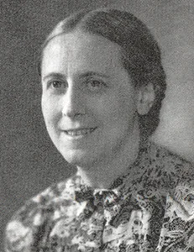
Regina Lago García
Birth:
1897
Death:
1966
Training Location(s):
MA, School of Superior Educational Studies (Madrid) (1921)
BA, University of Geneva (Rousseau Institute) (1930)
BA, Central Normal School of Palencia (1915)
Primary Affiliation(s):
Normal School of La Laguna (1924–1925)
Normal School of Lugo (1926–1927)
Normal School of Segovia (1932–1934)
National Pedagogical Museum (1934–1936)
Pedagogical Organization Section for Evacuated Children (1936–1939)
Women’s residence (1936–1937)
National Council for Evacuated Children (1936–1939)
Office International pour l’Enfance (Paris) (1937–1939)
Normal School of Pachuca (Hidalgo) (Mexico) (1940–1941)
Preparatory School of San Ildefonso (Mexico) (1941–unknown)
Career Focus:
Self-government; pedagogy; child psychology; educational psychology; art therapy
Biography
Regina Lago García, who was born in Palencia, Spain in 1897, began studying elementary and higher education at the Normal School of Palencia and later entered the Higher School of Education in Madrid where she specialized in science education, until 1921. During those years in Madrid, she stayed at the renowned progressive cultural center, “the women’s residence”, becoming its director years later. However, she soon became interested in Psychology, and in 1924, she took a course in experimental psychology, with the German neurologist Dr. Ziehen, at the Central University of Madrid, which had a female attendance of only three women.
In 1928, she earned a scholarship to study for two years at the Rousseau Institute; she would travel accompanied by her husband, the educator Juan Comas. In Geneva, she was trained in experimental psychology, psychometrics, and child psychology, working in this field with renowned developmentalist Jean Piaget, whose work would have a great impact on Regina’s future studies and perspective. She also had the opportunity to find out how the Normal Schools functioned there, to work with Edouarde Claparède, Swiss neurologist and educator and founder of the Rousseau Institute. And finally, to visit educator Maria Montessori’s house of Bambini.
As a result of her interest in educational Psychology, upon coming back to Spain she inquired into self-government with her work “Las Repúblicas Juveniles” (Lago, 1931), concerning how schools should be organized in order to encourage all students to develop an autonomous moral conscience grounded in mutual respect and collaboration among the group members, and learning this way to become critical citizens. In this way, it adhered to the “New School Movement” that was popular in education in Europe and the United States at that time.
In 1932, she published a translation of Maud A. Brown's work, The New Teaching of Hygiene, in the Journal of Pedagogy (Lago, 1932).
That same year, she became a Psychology teacher at the Normal School of Segovia, after teaching other subjects in various normal schools across the country. She left that position when she passed the exam that qualified her to become the head of the materials section at the National Pedagogical Museum, an institution that promoted innovative ideas in education and pedagogy in Spain.
Lago was always highly committed to a progressive stance in politics. For example, she affiliated with the “International Red Help”, an organization that supported communist prisoners and collected material and humanitarian aid during the Spanish Civil War (1936-1939), and with the Antifascist Women's Association. During the war, she showed a deep commitment to the Republic, both when she assumed the leadership of “the Women’s residence” in Valencia, and when she worked in the organization of the “Scholar Colonies”, which took responsibility for the lodging, education, and, eventually, evacuation of the children of civilian families belonging to the Republican side, her role being key in the teacher training. Thus, starting in 1936, she was appointed head of the Pedagogical Organization Section for Evacuated Children, and later, Pedagogical Advisor to the National Council for Evacuated Children. She moved to Paris in 1937, where she worked as Delegate for Evacuated Children, and in 1939 became part of the “Office International pour l’Enfance”. For the organization of the colonies, she proposed the well-known methodology of “the New School Movement”, based on self-government, putting her knowledge of psychology into practice in the education of the evacuated children. In this way, she not only provided for their basic needs, but also promoted the development of their personalities, providing places where they could be given a quality education to help them become “committed and critical citizens”, which she perceived indispensable in the war context. When the war ended, she returned to Spain to continue collaborating in the evacuation of civilians from the defeated side.
During that time, she worked on her study “The War Through Children’s Drawings” (1940), which was conducted by asking Spanish children, through a competition advertised in a newspaper, to make three drawings: one representing the time before the war, one during, and one after. From these, she would select 1872 drawings, which were displayed in 1939 at the National Pedagogical Museum of Paris. She analyzed the selected drawings and drew conclusions about the impact of war on childhood and the differences in understanding of war based on gender and age, demonstrating her Piagetian influence. The practice of encouraging children to create drawings that depicted the context of the war as a therapeutic tool to address post-traumatic stress would later be named “art therapy”, and Lago was thus a pioneer in its development.
This phenomenon had already begun to be studied by Alfred and Fritzi Brauner, Austrian-born sociologist and child psychiatrist respectively, who participated as international brigadistas in the Spanish Civil War. This technique continued to be used during World War II by Friedl Dicker-Brandeis, an Austrian Jewish educator and artist who used drawing as a means of therapy with Jewish children while in the Terezin concentration camp, where she perished.
In 1940, Lago went into exile to Mexico, where she stayed for more than twenty years. There, she remained committed to her political ideals, joining the Union of Spanish Antifascist Women in Mexico and serving as the head of the Committee for Solidarity and Aid to Educational Professionals in Spain, as part of the Executive Committee of the Federation of Educational Professionals in Exile. In addition, upon her arrival, she would report to the Pan-American Conference for Spanish Refugees on the 70000 evacuated children during the war.
In Mexico, she worked as a psychology teacher at the Normal School of Pachuca (Hidalgo) and in the Preparatory School of San Ildefonso at the National University of Mexico. There, she published “The Teaching of Psychology in Preparatory Schools” (1941). She also published “How to Measure Children's Intelligence” (1949); however, during those years, her work gradually lost significance, as it would happen to many other women scientists. Conversely, her husband, the anthropologist Juan Comas, who had accompanied her during her whole academic career, even as a collaborator, and from whom she would later divorce, ended up receiving much greater recognition.
Regina Lago died in 1966 in Mexico, having never returned to Spain. The careful work of Spanish historians of psychology devoted to gender perspectives has made it possible to restore her name and work as a pioneer of Spanish psychology.
By María José Monteagudo Soto (Valencia University, Spain) & Laura Carmona Navajo (Universidad Autónoma de Madrid, UAM) (2025)
To cite this article, see Credits
Selected Works
Comas, J., y Lago, R.(1933). La práctica de las pruebas mentales y de instrucción. Madrid. Publicaciones de la Revista de Pedagogía.
Lago, R. (1931). Las repúblicas juveniles. Revista de Pedagogía.
Lago, R. (1940a). La guerra a través de los dibujos infantiles. Educación y Cultura.
Lago, R. (1940b). Cómo se mide la inteligencia infantil. E.D.I.A.P.S.A.
Lago, R. (1941). La Enseñanza de la Psicología en la Escuela Preparatoria. Revista Reforma, nº 3.
About
García Colmenares, C. (2006): Autoridad femenina y reconstrucción biográfica: el caso de las primeras psicólogas españolas. Revista de Investigación en Educación, (3), 51-70.
García Colmenares, C. (2010). Regina Lago: una psicóloga comprometida con la infancia durante la guerra civil española. Participación Educativa, (14), 211-220.
Guil Bozal, A. (2016). Genealogía de psicólogas españolas en Latinoamérica. Revista Clepsydra, 15, 63-76.
Monteagudo Soto, M. J., & García Colmenares, C. (2025). Psicólogas pioneras: Historias de Ciencia, feminismo y compromiso social. Publicacions de la Universitat de València.
Regina Lago García
Birth:
1897
Death:
1966
Training Location(s):
MA, School of Superior Educational Studies (Madrid) (1921)
BA, University of Geneva (Rousseau Institute) (1930)
BA, Central Normal School of Palencia (1915)
Primary Affiliation(s):
Normal School of La Laguna (1924–1925)
Normal School of Lugo (1926–1927)
Normal School of Segovia (1932–1934)
National Pedagogical Museum (1934–1936)
Pedagogical Organization Section for Evacuated Children (1936–1939)
Women’s residence (1936–1937)
National Council for Evacuated Children (1936–1939)
Office International pour l’Enfance (Paris) (1937–1939)
Normal School of Pachuca (Hidalgo) (Mexico) (1940–1941)
Preparatory School of San Ildefonso (Mexico) (1941–unknown)
Career Focus:
Self-government; pedagogy; child psychology; educational psychology; art therapy
Biography
Regina Lago García, who was born in Palencia, Spain in 1897, began studying elementary and higher education at the Normal School of Palencia and later entered the Higher School of Education in Madrid where she specialized in science education, until 1921. During those years in Madrid, she stayed at the renowned progressive cultural center, “the women’s residence”, becoming its director years later. However, she soon became interested in Psychology, and in 1924, she took a course in experimental psychology, with the German neurologist Dr. Ziehen, at the Central University of Madrid, which had a female attendance of only three women.
In 1928, she earned a scholarship to study for two years at the Rousseau Institute; she would travel accompanied by her husband, the educator Juan Comas. In Geneva, she was trained in experimental psychology, psychometrics, and child psychology, working in this field with renowned developmentalist Jean Piaget, whose work would have a great impact on Regina’s future studies and perspective. She also had the opportunity to find out how the Normal Schools functioned there, to work with Edouarde Claparède, Swiss neurologist and educator and founder of the Rousseau Institute. And finally, to visit educator Maria Montessori’s house of Bambini.
As a result of her interest in educational Psychology, upon coming back to Spain she inquired into self-government with her work “Las Repúblicas Juveniles” (Lago, 1931), concerning how schools should be organized in order to encourage all students to develop an autonomous moral conscience grounded in mutual respect and collaboration among the group members, and learning this way to become critical citizens. In this way, it adhered to the “New School Movement” that was popular in education in Europe and the United States at that time.
In 1932, she published a translation of Maud A. Brown's work, The New Teaching of Hygiene, in the Journal of Pedagogy (Lago, 1932). That same year, she became a Psychology teacher at the Normal School of Segovia, after teaching other subjects in various normal schools across the country. She left that position when she passed the exam that qualified her to become the head of the materials section at the National Pedagogical Museum, an institution that promoted innovative ideas in education and pedagogy in Spain.
Lago was always highly committed to a progressive stance in politics. For example, she affiliated with the “International Red Help”, an organization that supported communist prisoners and collected material and humanitarian aid during the Spanish Civil War (1936-1939), and with the Antifascist Women's Association. During the war, she showed a deep commitment to the Republic, both when she assumed the leadership of “the Women’s residence” in Valencia, and when she worked in the organization of the “Scholar Colonies”, which took responsibility for the lodging, education, and, eventually, evacuation of the children of civilian families belonging to the Republican side, her role being key in the teacher training. Thus, starting in 1936, she was appointed head of the Pedagogical Organization Section for Evacuated Children, and later, Pedagogical Advisor to the National Council for Evacuated Children. She moved to Paris in 1937, where she worked as Delegate for Evacuated Children, and in 1939 became part of the “Office International pour l’Enfance”. For the organization of the colonies, she proposed the well-known methodology of “the New School Movement”, based on self-government, putting her knowledge of psychology into practice in the education of the evacuated children. In this way, she not only provided for their basic needs, but also promoted the development of their personalities, providing places where they could be given a quality education to help them become “committed and critical citizens”, which she perceived indispensable in the war context. When the war ended, she returned to Spain to continue collaborating in the evacuation of civilians from the defeated side.
During that time, she worked on her study “The War Through Children’s Drawings” (1940), which was conducted by asking Spanish children, through a competition advertised in a newspaper, to make three drawings: one representing the time before the war, one during, and one after. From these, she would select 1872 drawings, which were displayed in 1939 at the National Pedagogical Museum of Paris. She analyzed the selected drawings and drew conclusions about the impact of war on childhood and the differences in understanding of war based on gender and age, demonstrating her Piagetian influence. The practice of encouraging children to create drawings that depicted the context of the war as a therapeutic tool to address post-traumatic stress would later be named “art therapy”, and Lago was thus a pioneer in its development.
This phenomenon had already begun to be studied by Alfred and Fritzi Brauner, Austrian-born sociologist and child psychiatrist respectively, who participated as international brigadistas in the Spanish Civil War. This technique continued to be used during World War II by Friedl Dicker-Brandeis, an Austrian Jewish educator and artist who used drawing as a means of therapy with Jewish children while in the Terezin concentration camp, where she perished.
In 1940, Lago went into exile to Mexico, where she stayed for more than twenty years. There, she remained committed to her political ideals, joining the Union of Spanish Antifascist Women in Mexico and serving as the head of the Committee for Solidarity and Aid to Educational Professionals in Spain, as part of the Executive Committee of the Federation of Educational Professionals in Exile. In addition, upon her arrival, she would report to the Pan-American Conference for Spanish Refugees on the 70000 evacuated children during the war.
In Mexico, she worked as a psychology teacher at the Normal School of Pachuca (Hidalgo) and in the Preparatory School of San Ildefonso at the National University of Mexico. There, she published “The Teaching of Psychology in Preparatory Schools” (1941). She also published “How to Measure Children's Intelligence” (1949); however, during those years, her work gradually lost significance, as it would happen to many other women scientists. Conversely, her husband, the anthropologist Juan Comas, who had accompanied her during her whole academic career, even as a collaborator, and from whom she would later divorce, ended up receiving much greater recognition.
Regina Lago died in 1966 in Mexico, having never returned to Spain. The careful work of Spanish historians of psychology devoted to gender perspectives has made it possible to restore her name and work as a pioneer of Spanish psychology.
By María José Monteagudo Soto (Valencia University, Spain) & Laura Carmona Navajo (Universidad Autónoma de Madrid, UAM) (2025)
To cite this article, see Credits
Selected Works
Comas, J., y Lago, R.(1933). La práctica de las pruebas mentales y de instrucción. Madrid. Publicaciones de la Revista de Pedagogía.
Lago, R. (1931). Las repúblicas juveniles. Revista de Pedagogía.
Lago, R. (1940a). La guerra a través de los dibujos infantiles. Educación y Cultura.
Lago, R. (1940b). Cómo se mide la inteligencia infantil. E.D.I.A.P.S.A.
Lago, R. (1941). La Enseñanza de la Psicología en la Escuela Preparatoria. Revista Reforma, nº 3.
About
García Colmenares, C. (2006): Autoridad femenina y reconstrucción biográfica: el caso de las primeras psicólogas españolas. Revista de Investigación en Educación, (3), 51-70.
García Colmenares, C. (2010). Regina Lago: una psicóloga comprometida con la infancia durante la guerra civil española. Participación Educativa, (14), 211-220.
Guil Bozal, A. (2016). Genealogía de psicólogas españolas en Latinoamérica. Revista Clepsydra, 15, 63-76.
Monteagudo Soto, M. J., & García Colmenares, C. (2025). Psicólogas pioneras: Historias de Ciencia, feminismo y compromiso social. Publicacions de la Universitat de València.